To track citations and sources in AI search, capture which domains each AI engine cites when it answers questions in your category, tag each one by type and by whether it names you, and watch the list over time. The point is not to count citations for their own sake. It is to build a map of the pages AI trusts in your market, so you can see exactly where a competitor is cited and you are not, and go earn a place there. That map is the most actionable asset in AI visibility work.
Tracking mentions tells you if you are known. Tracking sources tells you why, and what to do about it. When you know the specific pages an engine leans on to build its answer, vague advice like “improve your authority” becomes a concrete list of domains to work on.
Classify every cited source by type
Start by collecting the domains cited across your tracked prompts, then sort them. Every cited source falls into one of five types, and the type tells you what kind of work earns a place on it.
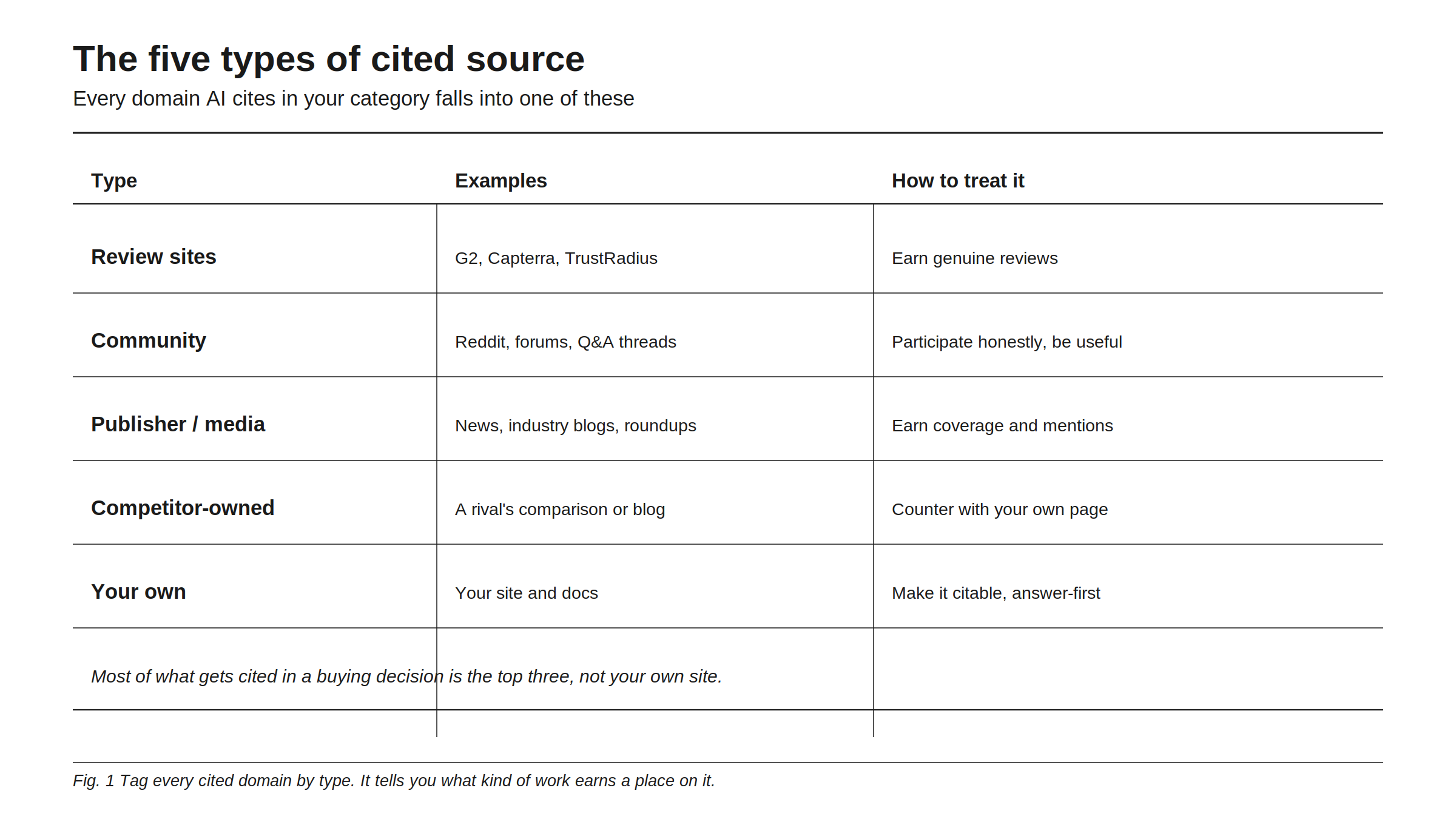
Review sites like G2 and Capterra are earned with genuine reviews. Community pages like Reddit threads and forums are earned by being useful in the conversation, not by dropping links. Publisher and media pages are earned through coverage and mentions. Competitor-owned pages, like a rival’s comparison post, are countered with a stronger page of your own. And your own site is the one source you fully control, so make it citable and answer-first. The uncomfortable pattern most teams find is that the top three types, the ones they do not control, are where most buying-decision citations actually come from.
Track the status of each source: yours, gap, or mixed
Type tells you how to earn a source. Status tells you whether you need to. Tag each cited domain one of three ways.
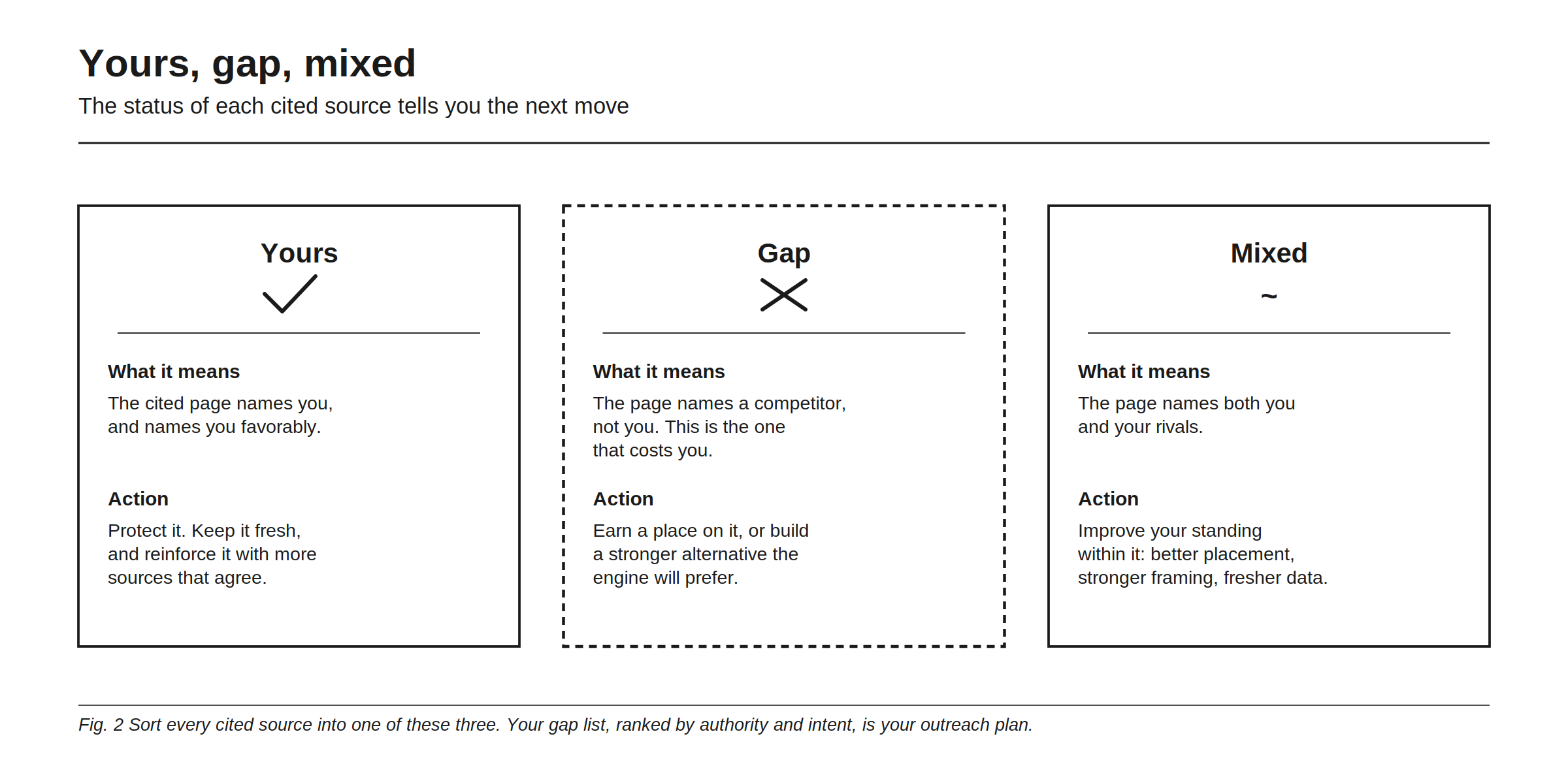
A source is yours when the cited page names you, and names you favorably. Protect it, keep it fresh, and reinforce it with more sources that agree. A source is a gap when the page names a competitor and not you, and this is the status that costs you deals, so it is where your outreach should focus. A source is mixed when the page names both you and your rivals, in which case the work is to improve your standing within it, through better placement, stronger framing, or fresher data. Your ranked list of gaps, sorted by the authority of the domain and the buyer intent of the prompts it feeds, is your outreach plan.
What to log for each source
For a source map you can actually work from, record a few fields per cited domain: the domain itself, its type, which engines cite it, its status for you, and the buyer intent of the prompts where it appears. Intent matters because a gap on a high-intent comparison page is worth far more than a gap on a low-intent informational one. With those fields, you can rank the whole list and always know the single most valuable source to earn next.
Watch it over time, not once
Citations shift. A new review, a fresh listicle, or an updated comparison can change which sources an engine trusts from one month to the next. A one-time snapshot tells you where you stand today, but it cannot tell you whether you are gaining or losing ground, or whether a fix worked. Track the same prompts on a schedule so you can watch your cited-source count and your gap list move. For the difference between a mention and a citation, which you are tracking here, see brand mentions vs citations in AI.
Automating source tracking
Capturing sources by hand across five engines and dozens of prompts is where manual tracking breaks down, because it is tedious and impossible to keep current. A tool does the collection and classification for you. Rankry’s Sources view records the cited domains per prompt and per model across ChatGPT, Claude, Gemini, Perplexity, Grok, Microsoft Copilot, and Google AI Overviews, labels each by type, tags its status as yours, gap, or mixed, and attaches the intent volume of the prompts it feeds, so your outreach list builds itself.
FAQ
How do I track which sources AI cites about my brand? Run your category prompts across the AI engines, record the domains each answer cites, and tag them by type and by whether they name you. Repeat on a schedule so you can see the list change over time.
What is a citation gap? A citation gap is a source AI cites in your category that names a competitor and not you. Ranked by the authority of the domain and the intent of the prompts it feeds, your gaps become a prioritized outreach list.
Which sources do AI engines cite most? It varies by category, but community pages like Reddit, review sites like G2 and Capterra, and independent listicles and comparisons are commonly cited, often more than a brand’s own website.
How often do AI citations change? They shift gradually as new reviews, listicles, and comparisons are published and indexed. Tracking the same prompts monthly is enough to see meaningful movement in your cited sources and gaps.
Can I track citations and sources for free? You can start by asking the engines directly and noting the cited domains by hand. A tool adds automated collection, classification, and tracking over time across all the engines at once.
Map every source AI cites in your category, and see exactly where a competitor is cited and you are not. Start a free 7-day Rankry trial, no card, first report in two minutes.