LLM citation tracking is the practice of monitoring which sources AI engines cite when they answer questions in your category, so you can see not just whether you are mentioned but why. It matters because citations are the root cause and mentions are only the symptom: if you track only whether ChatGPT names you, you learn that you lost; if you track the pages behind the answer, you learn why, and you get a concrete target. The sources that recur most across AI answers are reference pages (Wikipedia), community discussion (Reddit above all), and third-party review and comparison sites, usually weighted above your own website. That ranking, and the outreach list it implies, is where AI actually gets its sources. This guide explains how citation tracking works, which sources to watch, and how to turn a citation gap into a fix.
Most AI visibility work stops at the mention. Citation tracking is the layer underneath, and it is where the actual levers are.
Why citations are the root cause
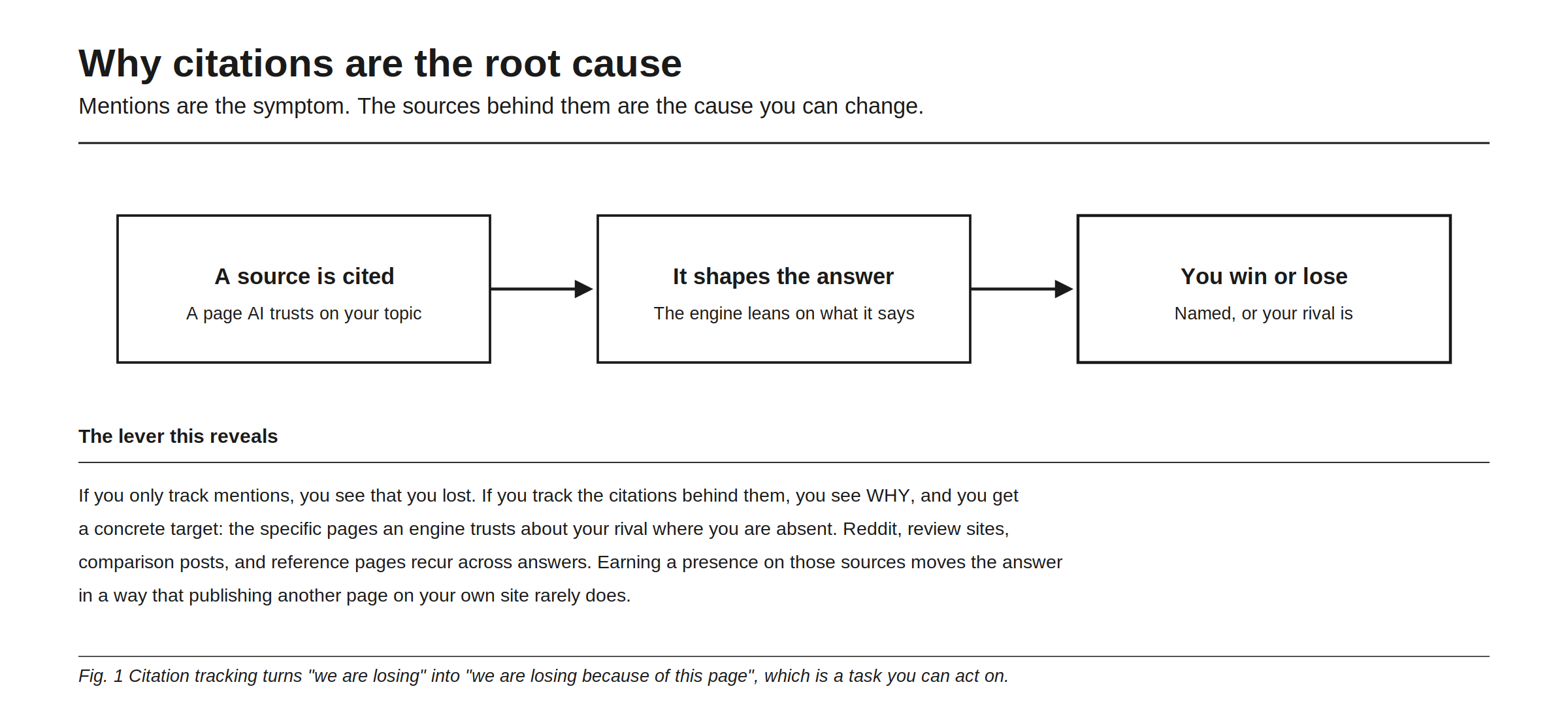
The chain is simple: a source is cited (a page AI trusts on your topic), it shapes the answer (the engine leans on what that page says), and you win or lose (you are named, or your rival is). Track only mentions and you see the last box. Track citations and you see the whole chain, which means you see the cause you can change. Mention, rank, visibility share, and citation are four metrics that move independently, laid out in four names, four different metrics.
That is the lever citation tracking reveals. If you only track mentions, you know you lost a prompt. If you track the citations behind it, you know why, and you get a concrete target: the specific pages an engine trusts about your rival where you are absent. Reddit threads, review sites, comparison posts, and reference pages recur across answers, and earning a presence on those sources moves the answer in a way that publishing another page on your own site rarely does. Citation tracking turns “we are losing” into “we are losing because of this page”, which is a task, not a mystery.
The domains AI cites most
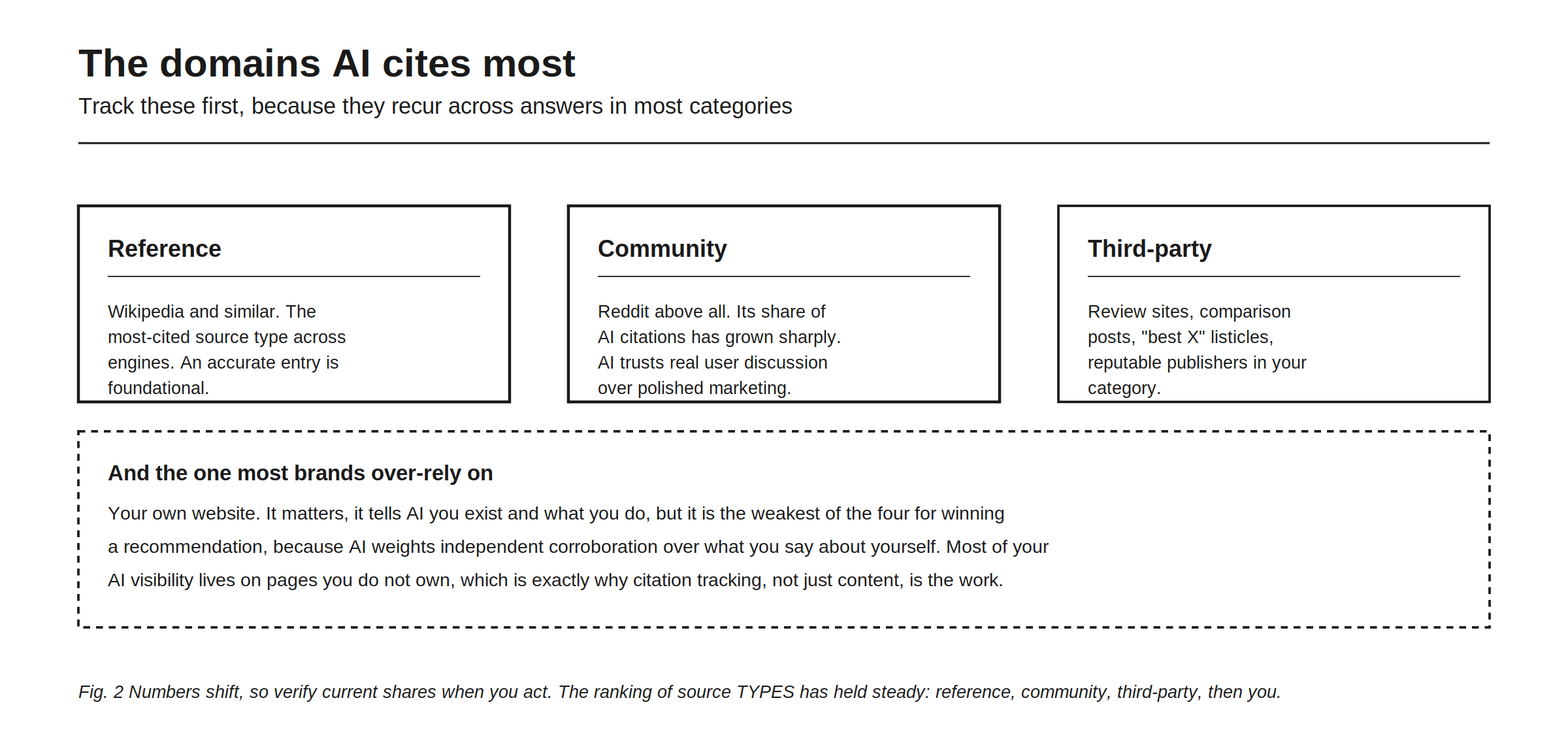
Four source types dominate, and they rank in a consistent order. Reference sources like Wikipedia are among the two or three most-cited domains on every engine, so an accurate, well-maintained entry is foundational. Community sources, Reddit above all, have grown their share of AI citations sharply, with reporting describing a roughly 450% rise in Reddit citations between March and June 2025 and a major licensing deal giving one engine’s ecosystem direct access to Reddit content; AI trusts real user discussion over polished marketing. Third-party sources, review sites, comparison posts, “best X” listicles, and reputable publishers in your category, are the next tier. And then, weakest of the four for winning a recommendation, your own website: it tells AI you exist and what you do, but AI weights independent corroboration over what you say about yourself.
The practical read: most of your AI visibility lives on pages you do not own. That single fact is why citation tracking, not just content production, is the work. The current numbers shift, so verify shares when you act, but the ranking of source types, reference, community, third-party, then you, has held steady. For how to build presence on the community side, see how to get cited on Reddit.
How to track LLM citations
Manually, run your buyer prompts in engines that expose sources, Perplexity shows them cleanly, ChatGPT and others increasingly do, and log the cited domains for each answer. Build a simple table: for each prompt, which sources were cited, and whether you appeared among them. Over a few weeks, the pattern emerges, the same handful of domains keep deciding your category’s answers. Those are your targets. There is also a content-side finding worth acting on: analyses of large citation datasets suggest a large share of AI citations are pulled from the opening portion of a page, so leading with your most citable, answer-first material raises your odds of being the quoted source. The detail is in how to optimize content for AI search.
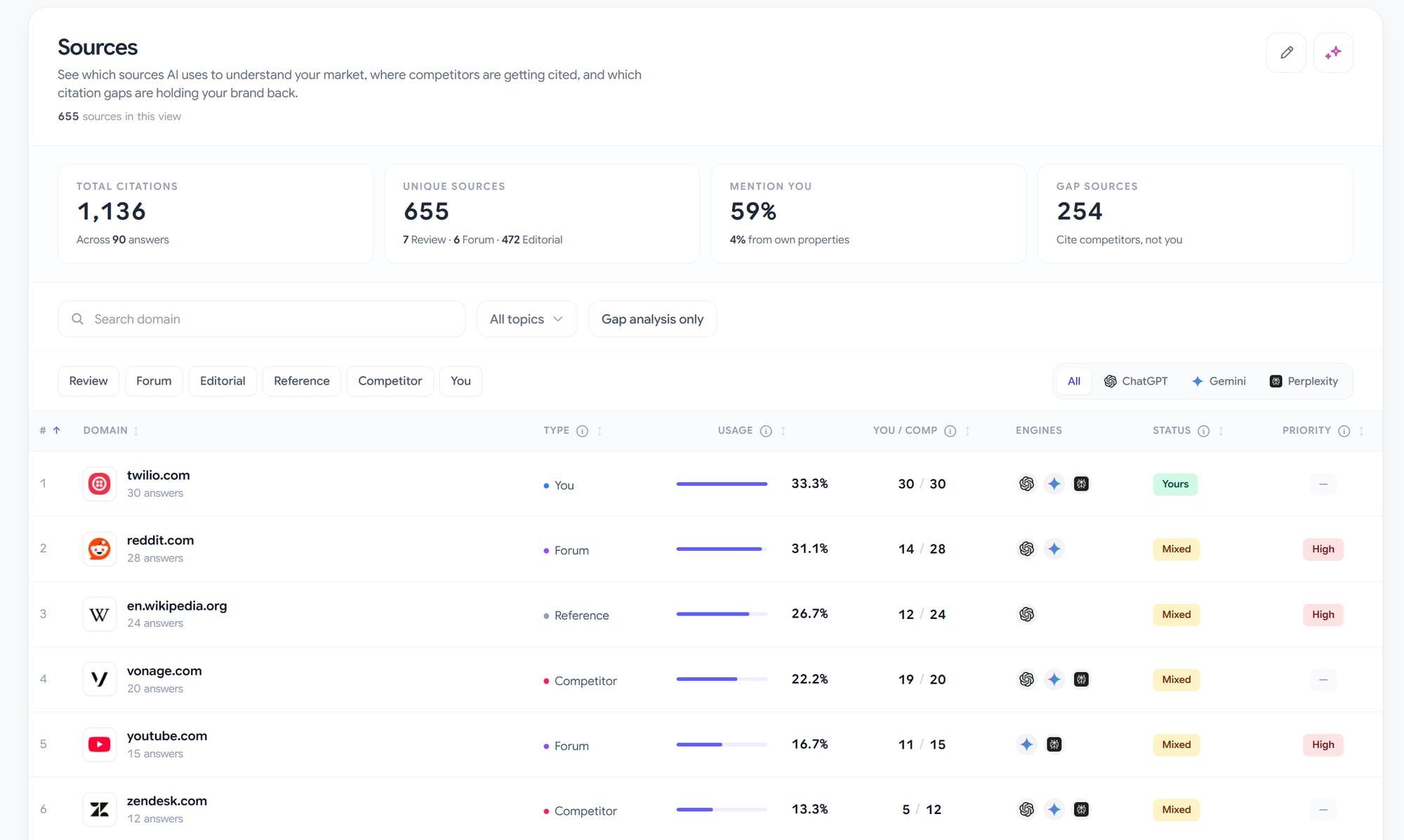
The manual method works but is tedious, since parsing sources out of every answer across five engines by hand is slow. A tool automates the parsing and, critically, flags the gaps: the sources cited for a competitor where you are absent.
From tracking to action
Rankry tracks the cited sources behind every answer across the engines you select, out of ChatGPT, Claude, Gemini, Perplexity, Grok, Microsoft Copilot, and Google AI Overviews, and flags exactly where a competitor is cited and you are not, turning citation data into an outreach and content plan, from $99 a month on a no-card trial. Once you can see the pages deciding your category, the work becomes concrete: correct your reference entry, earn genuine presence in the community threads AI cites, get onto the review and comparison pages, and refresh your own answer-first content. The broader monitoring loop this sits in is how to monitor your brand across AI search engines.
FAQ
What is LLM citation tracking? Monitoring which sources AI engines cite when they answer questions in your category, so you can see not just whether you are mentioned but which pages shaped the answer, and where a competitor is cited and you are absent.
Why track citations instead of just mentions? Mentions tell you that you won or lost; citations tell you why. The sources behind an answer are the cause you can change, so citation tracking turns a vague “we are losing” into a specific, fixable target.
Which sources do AI engines cite most? Reference sources like Wikipedia rank highest, followed by community discussion led by Reddit, then third-party review and comparison sites. Your own website is typically weighted below all three for winning a recommendation.
Is Reddit really that important for AI citations? Yes. Reddit ranks at or near the top of the most-cited domains in AI answers, first outright in several 2026 studies, and AI engines favor authentic user discussion over marketing content. For many categories it is one of the highest-leverage sources to appear on.
How do I track which sources AI cites for my category? Run your buyer prompts in engines that expose sources, log the cited domains per answer, and note whether you appear. Do this across engines over several weeks, or automate it with a tool that parses sources and flags your gaps.
See the exact sources deciding your category’s AI answers, and where you are missing from them. Start a free 7-day Rankry trial, no card, first report in two minutes.