Perplexity is the most overlooked of the major AI engines, and that is exactly what makes it the best early bet in AI visibility right now. Most brands optimize for ChatGPT, some think about Claude, and almost nobody deliberately targets Perplexity. Yet its users are high-intent researchers, and its citation-first design pushes them to click through to sources at a rate the chat-first engines do not match, because the product is built to send them there. Under-served demand plus high intent is exactly where you want to be early.
Where this sits in the wider picture. Calling Perplexity underrated is a claim about attention, not about size. ChatGPT is bigger, Google AI Overviews reach more people, and Microsoft Copilot arrives in the enterprise by default. The argument here is that Perplexity is the cheapest engine to win per unit of effort right now, because so few brands work it deliberately. That makes it a smart place to start, not a place to stop: the point of an early win on Perplexity is the citations and the source relationships it earns you, which then feed Claude, Gemini, Grok, Copilot, and ChatGPT as their indexes catch up.
A different kind of engine
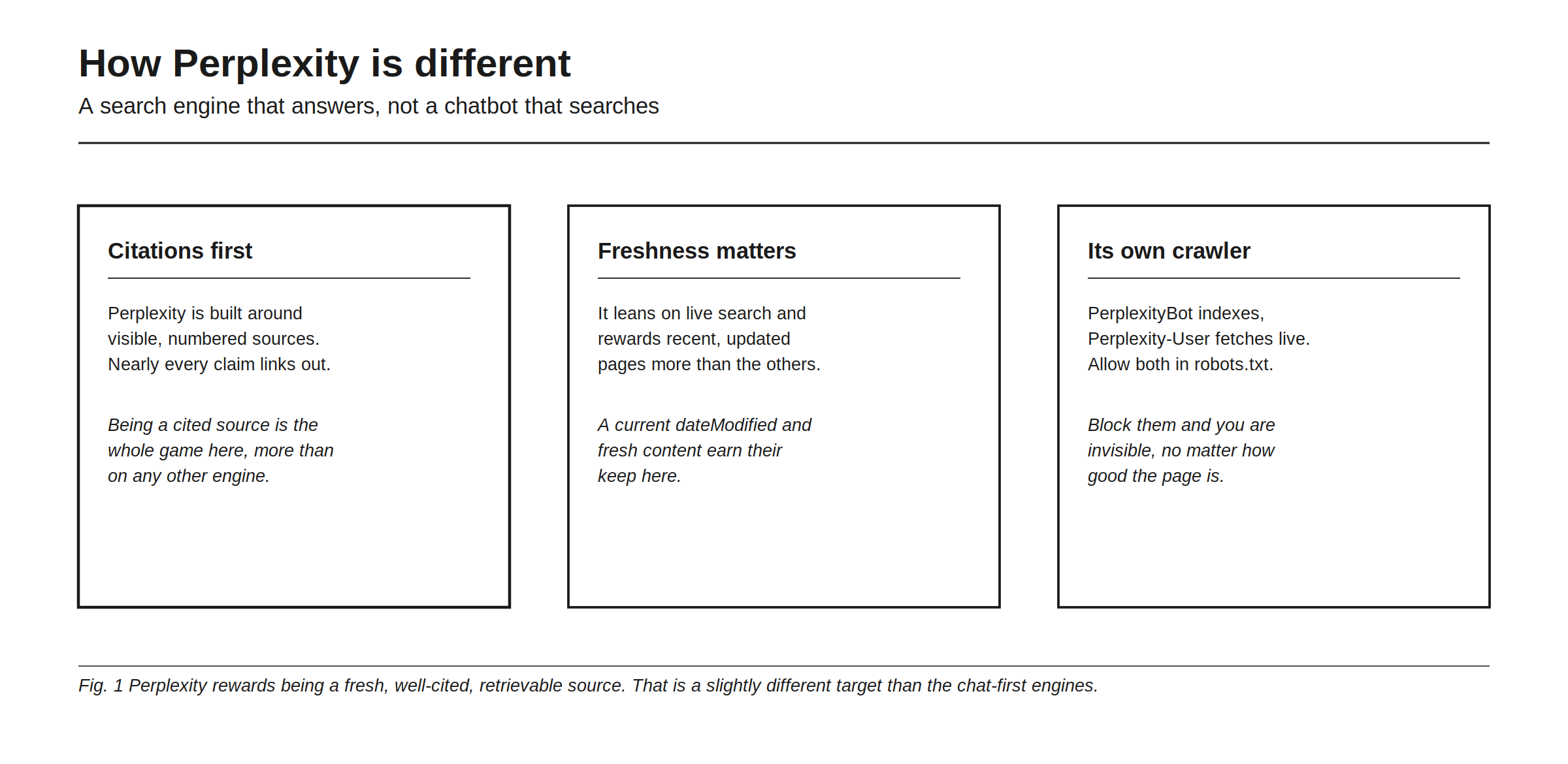
Perplexity is citations-first: nearly every claim in an answer links to a numbered source, so the product is essentially a research engine that happens to write summaries. Being one of those cited sources is the whole objective, a cleaner, more direct target than the looser “get mentioned” goal on chat-first engines. Add its strong freshness bias and its own crawlers, and you get an engine that rewards being a fresh, well-cited, retrievable source. We took the machinery apart in how Perplexity picks the sources it cites, and the full step-by-step playbook, robots.txt through third-party proof, is in how to get your brand recommended by Perplexity.
Why the window is open
Two reasons make Perplexity a smart investment specifically now. The competition is thin: while everyone crowds ChatGPT optimization, Perplexity is comparatively uncontested, so the same content and outreach effort buys more position than it would anywhere else. And the traffic converts: because answers push users toward the cited sources, an appearance is more likely to become a visit than on engines where people read the answer and stop. For a research-driven B2B buyer especially, a Perplexity citation lands at a high-intent moment, often while a shortlist is literally being formed.
There is also a compounding effect worth knowing: Perplexity citations tend to flow downstream, pages it surfaces get read, referenced, and re-cited across the wider answer ecosystem, so a win here often precedes wins elsewhere.
One honest note: Perplexity has been the subject of debate about how strictly its fetchers honor robots.txt. Configure your directives as you would for any crawler, and rely on monitoring, not assumptions, to confirm what is actually happening with your pages.
Make it one column, not a project
Perplexity should not be a separate initiative; it should be one column in your regular multi-engine tracking. Run the same buyer prompts you track everywhere through Perplexity weekly, record presence, position, and cited sources, and treat a “cited on Perplexity” win as the high-value event it is. Because its answers lean on fresh sources, it doubles as an early indicator: a change in who Perplexity cites can precede shifts on other engines. The weekly loop is in how to monitor your brand across AI search engines, and you can see exactly how Rankry reads the engine on the Perplexity visibility tracker page, tracked on every plan alongside ChatGPT, Claude, Gemini, Grok, Microsoft Copilot, and Google AI Overviews, from $99 a month on a no-card trial.
FAQ
Why should I optimize for Perplexity specifically? It is under-served, most brands ignore it while crowding ChatGPT, so the same effort buys more position. And its citation-first design sends more click-through traffic to cited sources, so an appearance is more likely to become a visit.
Is Perplexity worth it for B2B brands? Especially for B2B. Perplexity’s users skew toward research-driven professionals checking sources before a decision, so a citation there lands at a high-intent moment, often close to a shortlist being formed.
What makes Perplexity different from chat-first engines? Three things: it is built around visible, numbered citations, so being a cited source is the whole game; it weights freshness more heavily than the other engines; and it runs its own crawlers, so your robots.txt directly controls whether you can appear.
Should I focus on Perplexity instead of the bigger engines? No, start there rather than stop there. ChatGPT is larger, Google AI Overviews reach more people, and Microsoft Copilot arrives in the enterprise by default, so none of them are optional. Perplexity is the cheapest early win because few brands work it deliberately, and the citations and source relationships it earns you feed the other engines as their indexes catch up.
Track Perplexity beside the other six engines, and see exactly which sources cite you and which cite rivals. Start a free 7-day Rankry trial, no card, first report in two minutes.