When two brands are genuinely comparable, same features, similar price, same category, the AI still names one and not the other, and the tiebreaker is rarely the product itself. It falls back on the signals around the product: source consensus (do independent sources agree you belong?), distinctiveness (is there a reason to single you out, or do you sound identical to the competitor?), freshness (who looks current to the question being asked?), and relevance of fit (who matches the specific problem in the prompt?). Getting into the consideration set is step one, covered by entity recognition; winning the tiebreaker is a separate contest most brands never think about. The good news: none of these levers are the product, they are brand and evidence decisions you can actually move. This guide breaks down what tips a close call and how to win it.
Most GEO advice stops at “get mentioned.” But in a crowded category, being eligible is table stakes. The real question is why the AI names your lookalike competitor instead of you, when on paper you are the same.
Eligible is not the same as chosen
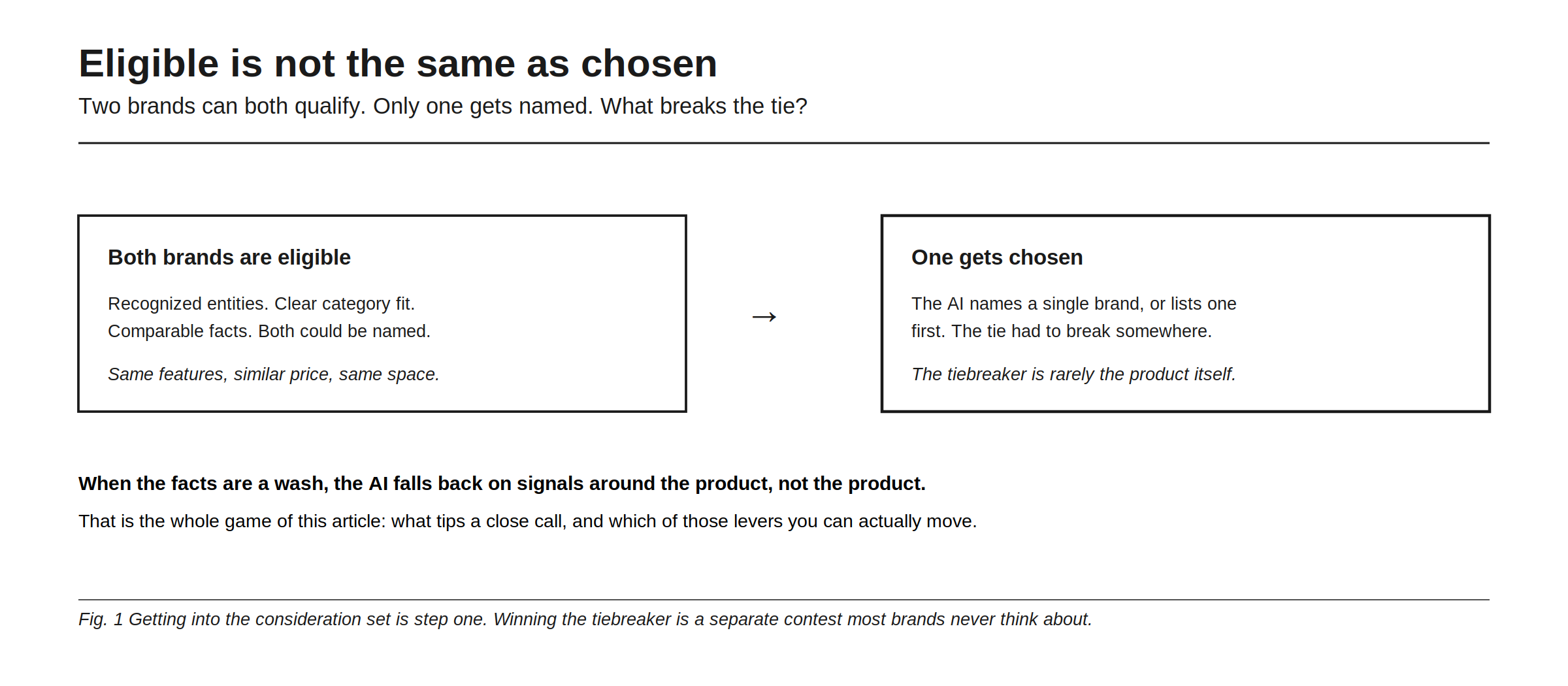
Hold the two states apart. Both brands are eligible: recognized entities, clear category fit, comparable facts, both could be named, same features, similar price, same space. Then one gets chosen: the AI names a single brand, or lists one first, so the tie had to break somewhere, and the tiebreaker is rarely the product itself.
When the facts are a wash, the AI falls back on signals around the product, not the product. That is the whole game here: what tips a close call, and which of those levers you can actually move. Getting into the consideration set is step one, the entity-recognition problem in brand entity recognition; winning the tiebreaker is a separate contest most brands never think about. This piece is about that second contest.
The four tiebreakers
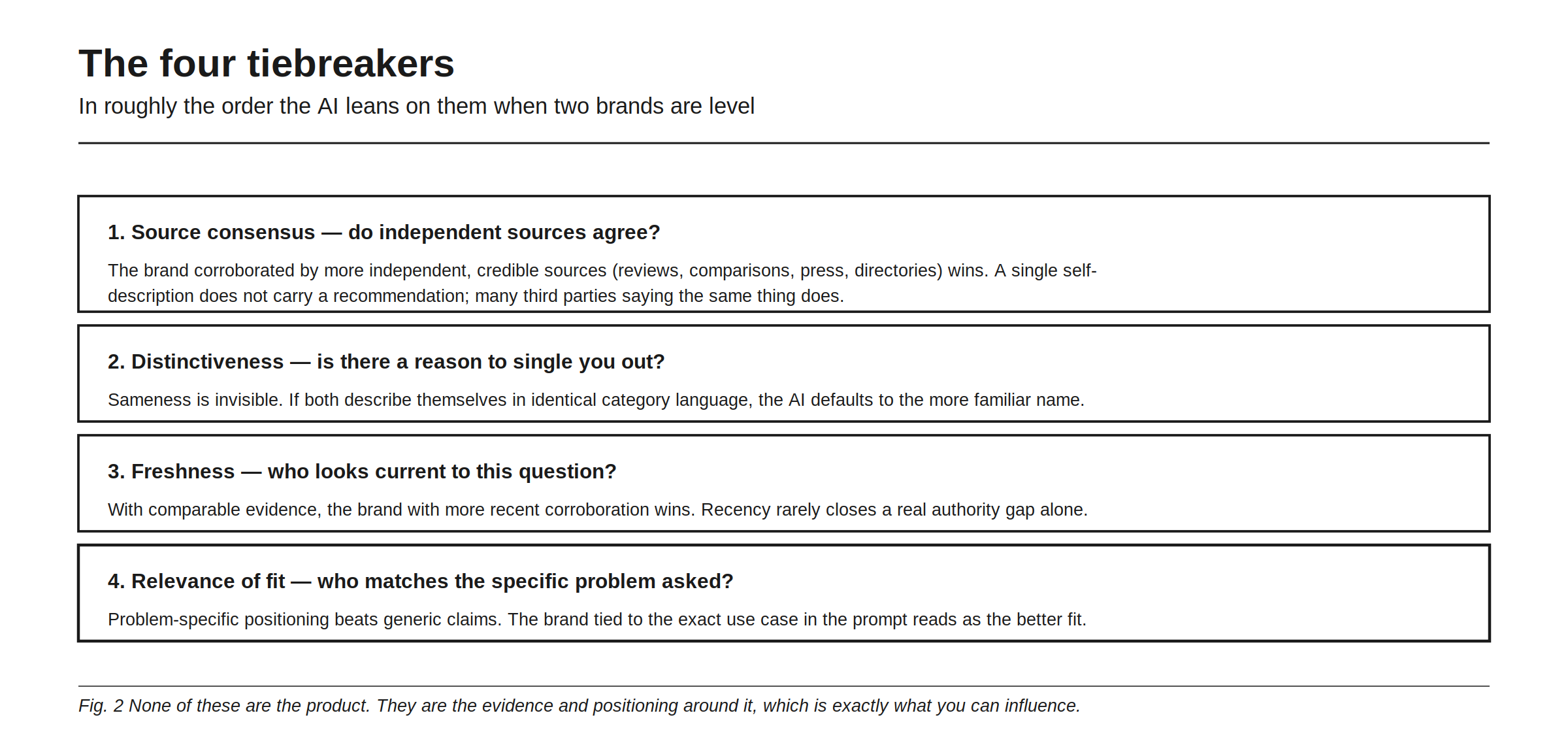
Four signals decide it, in roughly the order the AI leans on them. First, source consensus, do independent sources agree? The brand corroborated by more independent, credible sources (reviews, comparisons, press, directories) wins, because a single self-description does not carry a recommendation but many third parties saying the same thing does, which is the source hierarchy in where AI actually gets its sources. Second, distinctiveness, is there a reason to single you out? Sameness is invisible, so if both describe themselves in identical category language, the AI defaults to the more familiar name. Third, freshness, who looks current to this question? With comparable evidence, the brand with more recent corroboration wins, though recency rarely closes a real authority gap alone. Fourth, relevance of fit, who matches the specific problem asked? Problem-specific positioning beats generic claims, so the brand tied to the exact use case in the prompt reads as the better fit.
None of these are the product. They are the evidence and positioning around it, which is exactly what you can influence. And notice how they interact: distinctiveness without corroboration is just a claim, while corroboration without distinctiveness makes you a safe but forgettable option the AI passes over for the bigger name.
How to win the close call
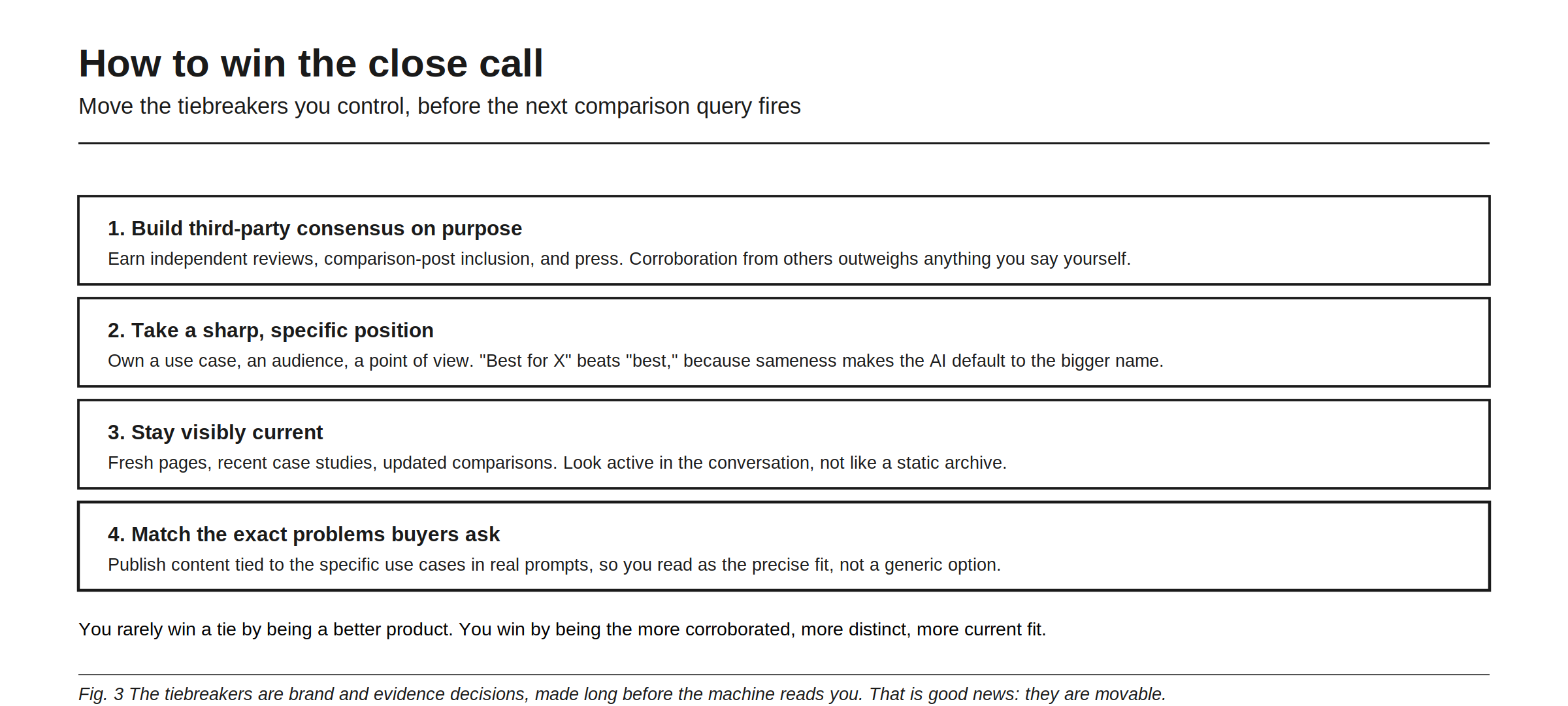
Move the tiebreakers you control, before the next comparison query fires. First, build third-party consensus on purpose: earn independent reviews, comparison-post inclusion, and press, because corroboration from others outweighs anything you say yourself. Second, take a sharp, specific position: own a use case, an audience, a point of view, since “best for X” beats “best,” because sameness makes the AI default to the bigger name. Third, stay visibly current: fresh pages, recent case studies, updated comparisons, so you look active in the conversation, not like a static archive. Fourth, match the exact problems buyers ask: publish content tied to the specific use cases in real prompts, so you read as the precise fit, not a generic option, which is why choosing the right prompts to track matters, per choosing which buyer questions to track.
You rarely win a tie by being a better product. You win by being the more corroborated, more distinct, more current fit. The tiebreakers are brand and evidence decisions, made long before the machine reads you, and that is good news: they are movable.
Why this favors the smaller, sharper brand
There is a counterintuitive advantage buried in these tiebreakers, and it is worth saying plainly because it reframes the whole contest. A big, generic competitor wins the “most familiar name” default only when everything else is equal. The moment you are more distinct, more corroborated in your specific niche, and more visibly current on the exact problem asked, you give the AI a reason to override that default. This is why a niche brand with concentrated, problem-specific coverage in authoritative sources routinely out-recommends a larger competitor whose mentions are dispersed and generic. The larger brand has more total mentions; you have more relevant ones. For a founder or marketer without a big-name budget, that is the opening: you do not have to out-spend the category leader, you have to out-specify them, become unmistakably the answer to a narrower question, backed by independent voices, and kept current. That is a communications and positioning game, not a product-spec arms race, which means it rewards clarity and relationship-building over budget. And because a mention is not the same as a recommendation, closing this gap is what converts presence into being the named pick, the distinction in the mention-versus-recommendation gap. Rankry shows which brand each engine actually recommends in your category, and the sources it pulled from, so you can see exactly where a competitor is out-corroborating or out-positioning you, from $99 a month on a no-card trial.
FAQ
How does AI decide between two similar brands? When two brands have comparable facts, the AI breaks the tie on signals around the product: source consensus (do independent sources agree), distinctiveness (a specific reason to single you out), freshness (who looks current to the question), and relevance of fit (who matches the exact problem asked). The product itself is rarely the deciding factor.
Why does AI recommend my competitor when our products are basically the same? Usually because they win a tiebreaker you are not competing on: more independent third-party corroboration, a sharper distinct position, fresher relevant content, or tighter fit to the specific prompt. If you both sound identical, the AI tends to default to the more familiar name.
Does freshness alone help me beat a bigger competitor? Only when your evidence is otherwise comparable. Freshness is a tiebreaker, not a substitute for authority, so a burst of new content rarely displaces an established, well-corroborated competitor by itself. Combine recency with real third-party consensus and distinctiveness to move the needle.
How can a small brand out-recommend a larger one? By being more specific and more corroborated in a narrow niche. A brand with concentrated, problem-specific coverage in authoritative sources often out-recommends a larger competitor with dispersed, generic mentions. Out-specify rather than out-spend: own a use case and back it with independent voices.
What actually moves these tiebreakers? Communications and positioning, not product changes: earning independent reviews and press, taking a distinct “best for X” position, keeping pages and case studies current, and publishing content tied to the exact use cases buyers ask about. These are decisions made before the AI ever reads you.
See which brand each engine recommends in your category, and the exact sources behind it, so you know where a rival out-corroborates you. Start a free 7-day Rankry trial, no card, first report in two minutes.