A mention is not a recommendation, and confusing the two is why many “AI visibility wins” never move revenue. A mention is the AI naming you among several options; a recommendation is the AI telling the buyer to pick you, or placing you first. Only one closes deals. Because a majority of AI answers name no brand at all, simply getting mentioned already puts you ahead of many competitors, but mention is the floor, not the goal. You can even rise in mentions while falling in recommendations, more visible yet less chosen, a chart that looks great over a pipeline that does not. The gap between the two is closed by third-party proof, reviews, comparisons, and communities, because AI mentions you from your own site but recommends you based on what others say. This guide separates them and shows how to move from one to the other.
If your AI visibility number is going up but your sales are not, this distinction is almost certainly why. You are probably measuring, and celebrating, the wrong one.
Mentioned is not recommended
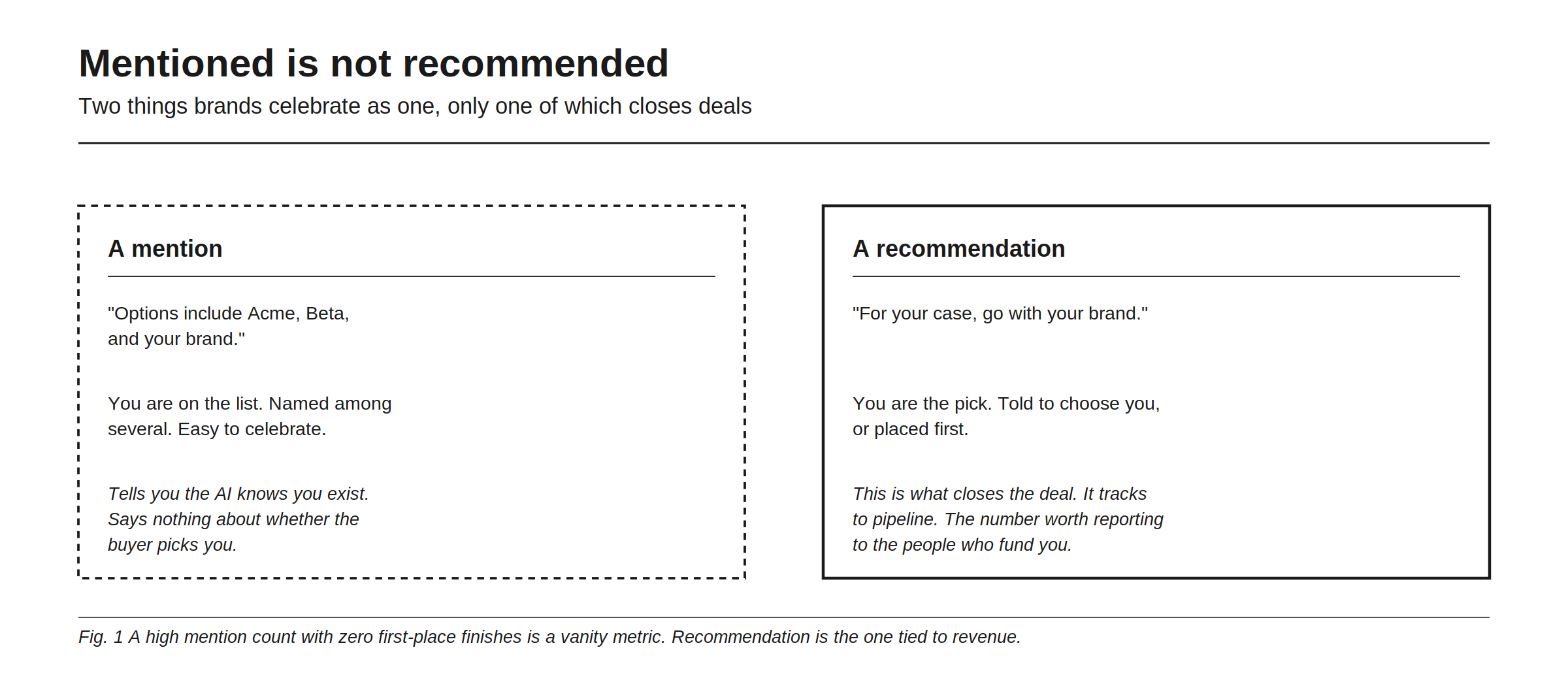
The difference is stark once you name it. A mention sounds like “options include Acme, Beta, and your brand”, you are on the list, named among several, and it is easy to celebrate. It tells you the AI knows you exist, but says nothing about whether the buyer picks you. A recommendation sounds like “for your case, go with your brand”, you are the pick, told to choose you or placed first, and this is what closes the deal, tracks to pipeline, and is the number worth reporting to the people who fund you.
A high mention count with zero first-place finishes is a vanity metric. Recommendation is the one tied to revenue. The broader family of metrics this sits inside, mention, rank, visibility, citation, is mapped in four names, four different metrics.
The vanity trap in numbers
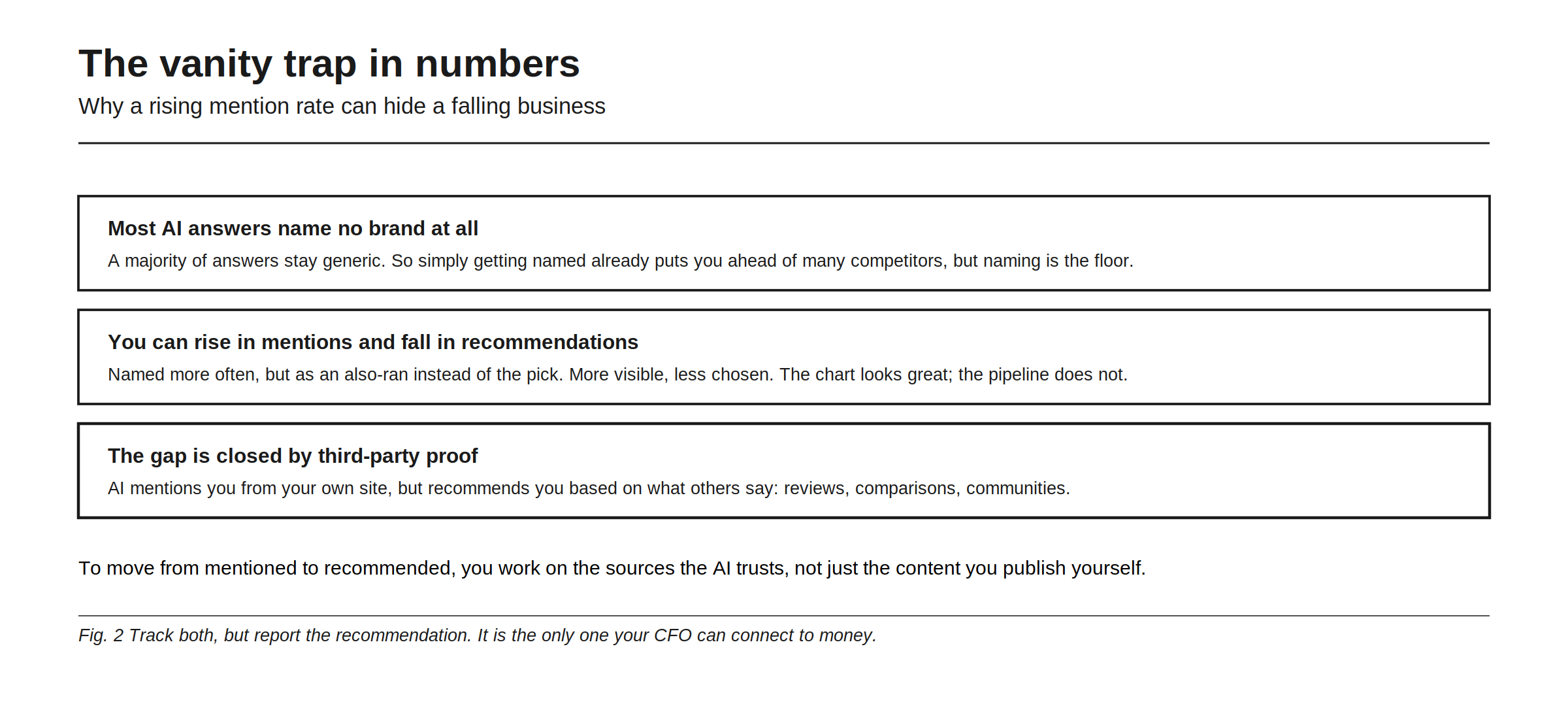
Three facts explain how a rising number can hide a falling business, and a fourth sits underneath them: the words the AI uses about you, which is the framing question, decide whether the mention helps at all. First, most AI answers name no brand at all: a majority stay generic, so simply getting named already puts you ahead of many competitors, but naming is the floor. Second, you can rise in mentions and fall in recommendations: named more often but as an also-ran instead of the pick, more visible and less chosen, so the chart looks great while the pipeline does not. Third, the gap is closed by third-party proof: AI mentions you from your own site, but recommends you based on what others say, reviews, comparisons, communities.
So to move from mentioned to recommended, you work on the sources the AI trusts, not just the content you publish yourself. Track both, but report the recommendation, because it is the only one your CFO can connect to money. Why those third-party sources carry the weight is covered in LLM citation tracking.
From mentioned to recommended
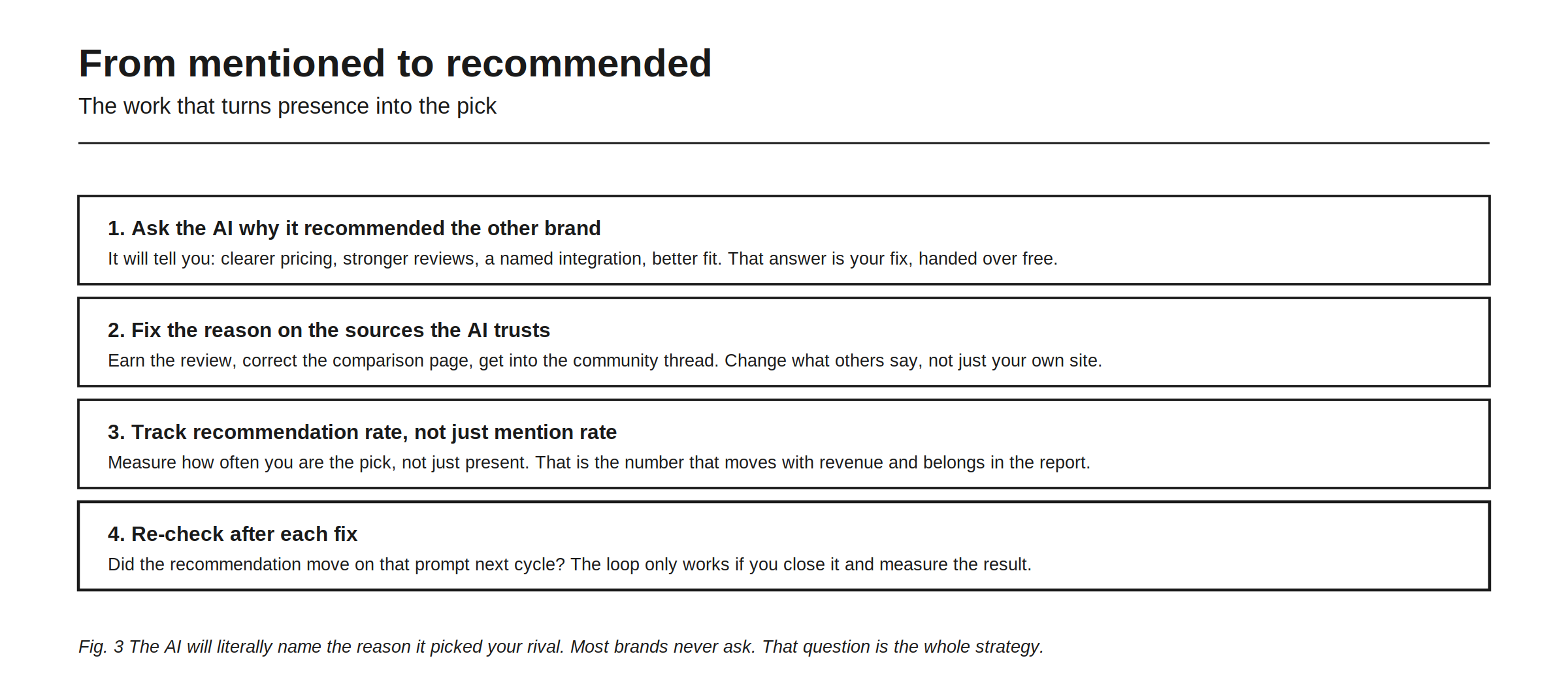
Four steps make the move. First, ask the AI why it recommended the other brand: it will tell you, clearer pricing, stronger reviews, a named integration, better fit, and that answer is your fix, handed over free. Second, fix the reason on the sources the AI trusts: earn the review, correct the comparison page, get into the community thread, changing what others say rather than only your own site. Third, track recommendation rate, not just mention rate: measure how often you are the pick, not just present, because that is the number that moves with revenue and belongs in the report. Fourth, re-check after each fix: did the recommendation move on that prompt next cycle, since the loop only works if you close it and measure the result.
The AI will literally name the reason it picked your rival. Most brands never ask, and that single question, “why did you recommend them,” is the whole strategy in miniature. It turns a vague “we need better AI visibility” into a concrete, fixable list.
Why this matters more now that ads exist
The mention-versus-recommendation gap became more valuable, not less, the moment ads entered AI answers. When a competitor can pay to sit beside the answer, the organically recommended brand holds the position a rival now has to buy their way next to, which is covered in ads in ChatGPT and your organic visibility. A mere mention offers no such protection; only being the genuine recommendation does. And because AI-referred visitors who arrive on a recommendation convert at a multiple of ordinary traffic, per the business case for AI visibility, the recommendation is where the compounding value concentrates. Track the recommendation, fix the reasons behind it, and you are optimizing the one metric that survives contact with a revenue report. Rankry separates mention from recommendation across every engine you run and shows the reason a competitor won, from $99 a month on a no-card trial.
FAQ
What is the difference between a mention and a recommendation in AI answers? A mention is your brand named among options in the answer. A recommendation is the AI telling the buyer to pick you or placing you first. Mentions show you exist; recommendations close deals and track to revenue.
Why is my AI visibility rising but sales flat? Most likely because your mention rate is rising while your recommendation rate is not. You are being named more often but as an also-ran rather than the pick. Mentions are a vanity metric unless they convert into recommendations.
How do I get recommended instead of just mentioned? Ask the AI why it recommended a competitor, it usually names the reason, then fix that reason on the third-party sources it trusts: reviews, comparison pages, community threads. AI recommends based on what others say, not only your own site.
Which metric should I report to leadership? Recommendation rate, how often you are the pick, not mention rate. Recommendation is the metric that tracks to pipeline and revenue. A high mention count with few first-place finishes will not survive scrutiny from someone who controls budget.
Why does third-party proof matter for recommendations? Because AI mentions you from your own site but recommends you based on independent corroboration, reviews, comparisons, and communities. To move from mentioned to recommended you improve what trusted third parties say about you, not just your own pages.
See where you are merely mentioned versus genuinely recommended, and the reason a competitor won, across every engine. Start a free 7-day Rankry trial, no card, first report in two minutes.