Perplexity and ChatGPT pick brands with different machinery: Perplexity is a search engine that writes, running every answer through live retrieval from its own index and citing sources every time, while ChatGPT is a writer that sometimes searches, answering from training knowledge first and browsing only when it decides the question needs it. The practical consequence for brands: your Perplexity position responds to content work in weeks, your ChatGPT position has a slow-moving training layer you cannot edit, and the same buyer question routinely produces different shortlists on each. Winning one does not mean winning the other.
We keep seeing teams treat “AI visibility” as one number. It is not, and these two engines are the clearest illustration of why, because they sit at opposite ends of the retrieval spectrum. This is the same reason AI engines disagree about your brand in general, but the Perplexity-ChatGPT split is the one most buyers actually experience.
Which engines this covers. Perplexity and ChatGPT are the two ends of the retrieval spectrum, which is why they make the cleanest pair to compare. They are also only two of seven engines your buyers use. Claude, Gemini, Grok, Microsoft Copilot, and Google AI Overviews sit at different points on the same spectrum, and each one lands somewhere between the two cases below. Once you understand this pair you can place the rest, and the map of all of them is in why AI engines disagree about your brand.
Two different machines
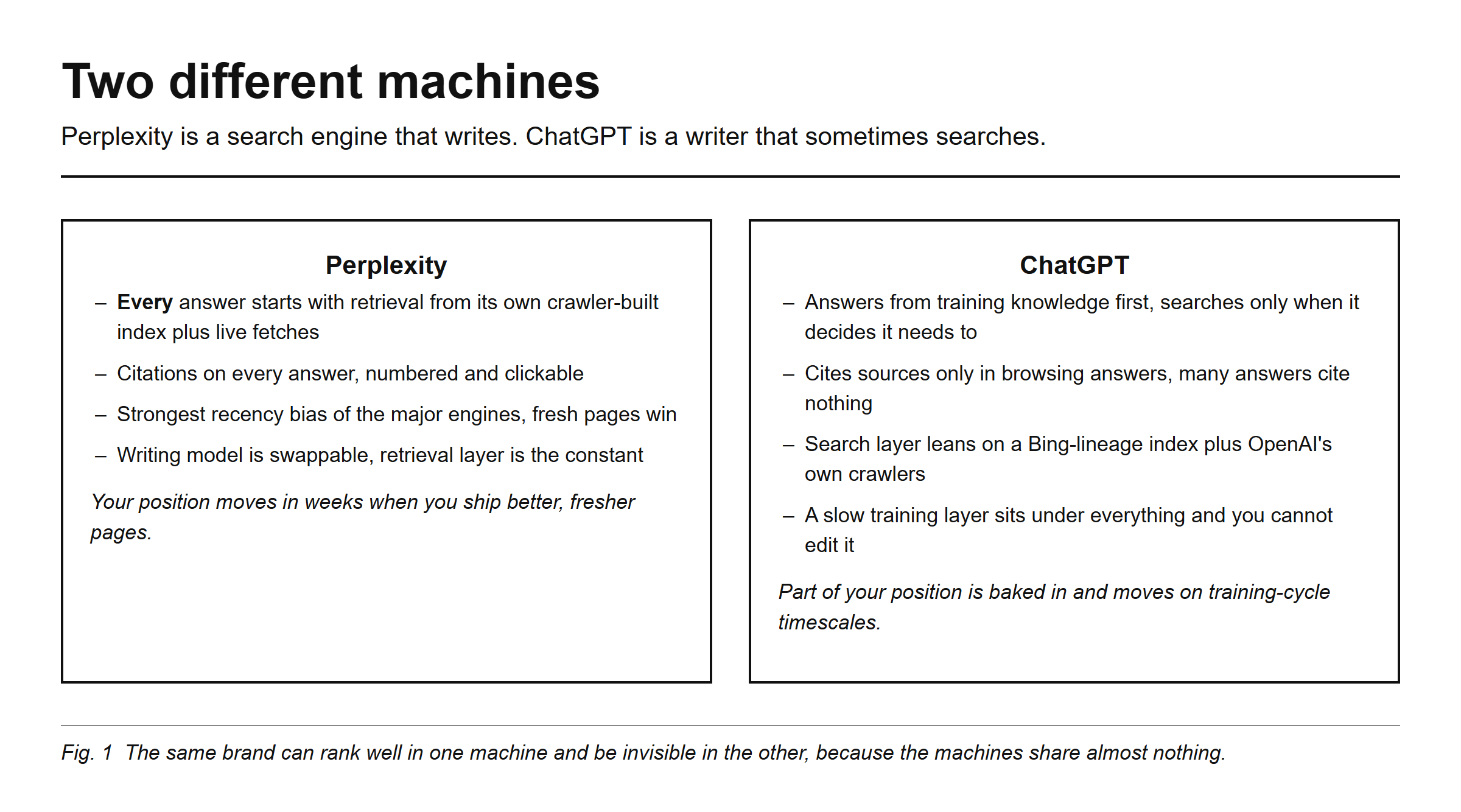
Perplexity’s machinery is covered in depth in how Perplexity picks the sources it cites, but the short version: every query triggers retrieval from its own crawler-built index plus live fetches, a reranker filters hard for relevance and freshness, and the answer arrives with numbered citations, always. The writing model is swappable, the retrieval layer is the constant.
ChatGPT inverts the architecture. Its default mode is answering from what the model already knows, and it searches only when it judges the question needs fresh information. When it does browse, its search layer leans on a Bing-lineage index plus OpenAI’s own crawlers, OAI-SearchBot for indexing and ChatGPT-User for live fetches. When it does not browse, the answer comes entirely from training data, no citations, no retrieval, and no way for this quarter’s content work to have touched it.
That last case is the one brands underestimate. A large share of recommendation-style answers in ChatGPT are uncited, training-knowledge answers. For those, your position was decided months ago by the state of the web when the model trained, which is why consistent, corroborated coverage of your brand across many sources matters so much there, and why a great new landing page changes nothing overnight.
Same question, different shortlists
Run a real buyer question through both engines side by side and the difference stops being theoretical. Perplexity’s answer assembles from whatever survives retrieval today, so it skews toward recently updated comparison pages and roundups, and its shortlist can change when one strong new source enters the index. ChatGPT’s answer blends its trained impression of the category with whatever it browses, so established brands with years of consistent coverage punch above their weight there even with stale websites.
Neither shortlist is more correct. They are different measurements of different substrates, Perplexity measuring the current state of the indexed web, ChatGPT measuring accumulated consensus plus an optional live check. Your buyers use both, which means you are being shortlisted, or skipped, by both machines every day.
What moves each engine
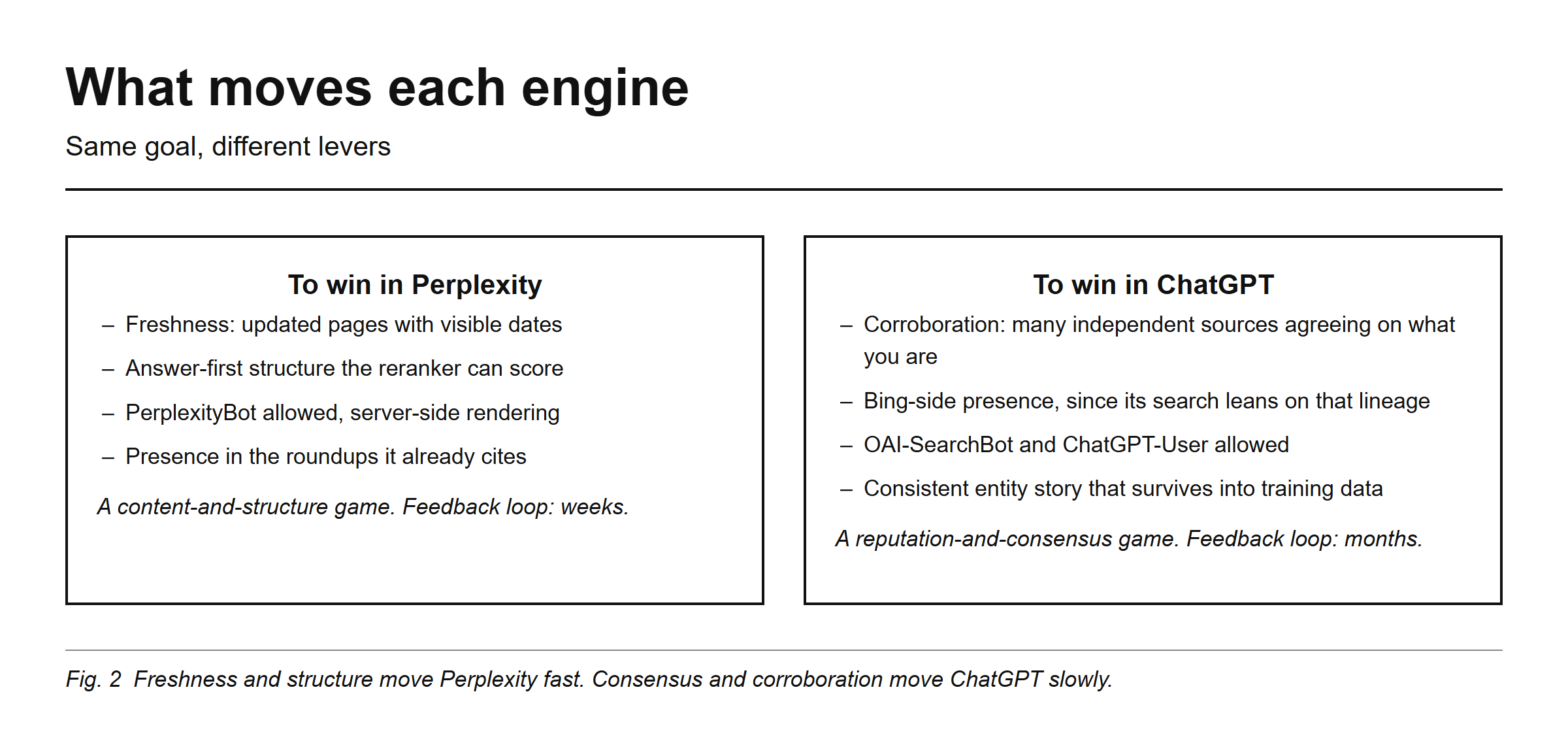
The Perplexity playbook is a content-and-structure game: freshness with visible dates, answer-first pages the reranker can score, PerplexityBot allowed with server-rendered content, and presence in the third-party roundups it already cites. Feedback loop measured in weeks. The step-by-step is in how to get your brand recommended by Perplexity.
The ChatGPT playbook is a reputation-and-consensus game: many independent sources agreeing on what you are and who you are for, presence on the Bing side of the web since its search lineage runs through it, OpenAI’s bots allowed, and an entity story consistent enough to survive into the next training cycle. Feedback loop measured in months. The full version is in how to improve visibility in ChatGPT.
The overlap is real but partial: crawlable, server-rendered, answer-first pages help both. The divergence is where budgets get misallocated, a freshness sprint does little for ChatGPT’s training layer, and a year of reputation work is overkill if your actual gap is that Perplexity cannot read your JavaScript-rendered site.
Stop guessing which one you are losing
The uncomfortable part: without measurement you do not know which machine is costing you pipeline. We have watched brands pour effort into ChatGPT-facing reputation work while their Perplexity column sat at zero over a robots.txt line, and the reverse, fresh content shipping weekly into a category where ChatGPT’s trained impression of them was the actual blocker.
Per-engine tracking is the fix. Run the same buyer prompts on both engines on a schedule, watch presence, rank, and cited sources separately, and put the next quarter’s effort where the gap is. Rankry tracks Perplexity and ChatGPT side by side, along with Claude, Gemini, and Grok, with every answer’s reasoning and cited sources kept as evidence, and each engine gets its own column so the two machines stop blurring into one score.
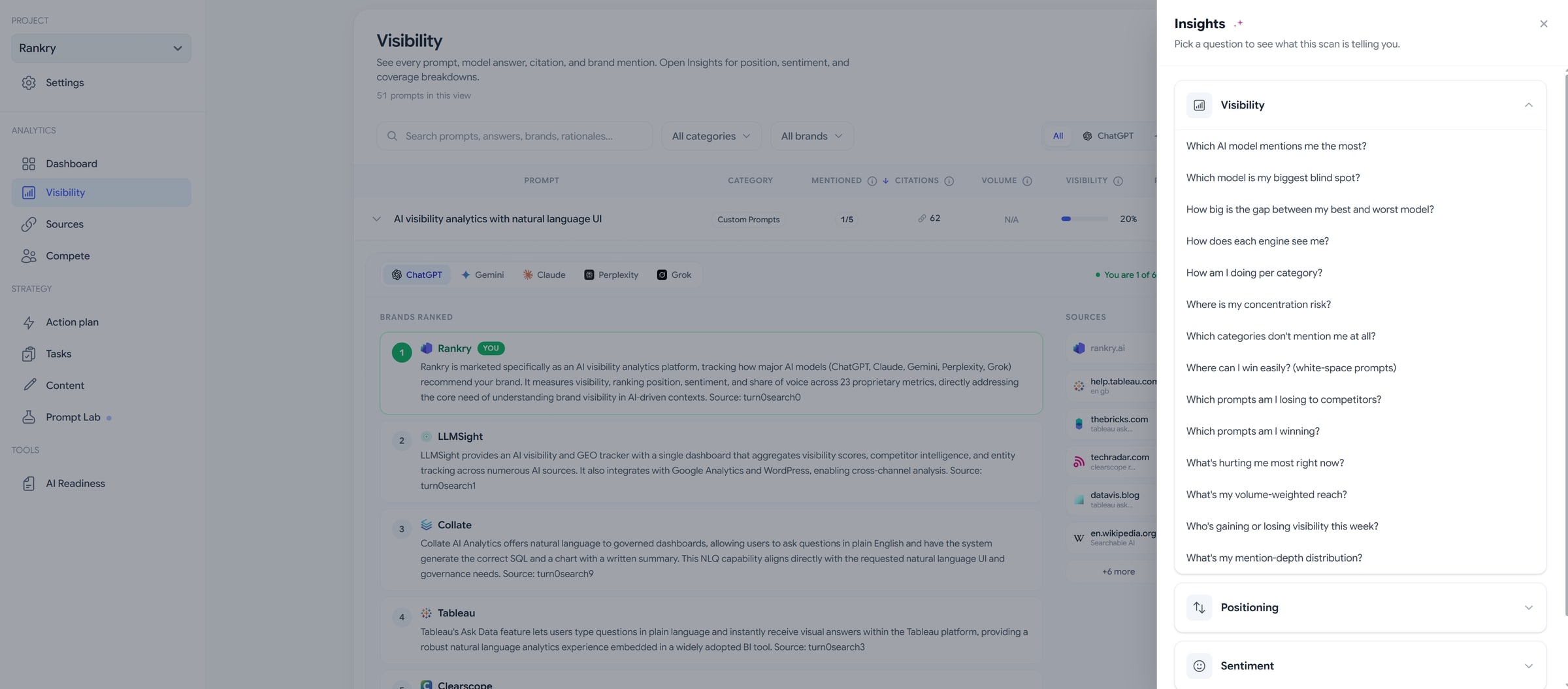
You can see each engine’s dedicated view on the Perplexity tracker page and the ChatGPT tracker page.
FAQ
Do Perplexity and ChatGPT recommend the same brands? Often not. They retrieve from different indexes, weigh freshness differently, and ChatGPT answers many questions from training knowledge without searching at all. The same buyer question routinely produces different shortlists on each.
Which is easier to influence, Perplexity or ChatGPT? Perplexity, and it is not close. Every Perplexity answer runs through live retrieval with a strong freshness bias, so content improvements can move your position in weeks. ChatGPT’s training layer moves on model-release timescales you cannot control.
Does ChatGPT always cite sources like Perplexity does? No. Perplexity cites on every answer by design. ChatGPT cites only when it decides to browse, and many of its recommendation answers come from training knowledge with no citations at all.
Should I optimize for Perplexity or ChatGPT first? Do the shared work first, crawlable pages and answer-first structure, since it helps both. Then let your data decide: track your position on both engines and put the next quarter’s effort where the gap against competitors is widest.
Why does my brand rank well in one but not the other? Because the machines share almost nothing: different indexes, different freshness weighting, and a training layer that only ChatGPT has. Strength in one engine says very little about the other, which is why per-engine tracking exists.
Where do the other engines fall on this spectrum? Between the two. Perplexity retrieves for every answer and ChatGPT retrieves when it decides to, and Claude, Gemini, Grok, Microsoft Copilot, and Google AI Overviews each sit somewhere in that range, with Copilot leaning on the Bing index and AI Overviews on the Google index. Once you can place an engine on this spectrum you can predict how quickly your content work will show up in it.
See where you stand on Perplexity and ChatGPT separately, same prompts, same week, with reasoning and cited sources as evidence. Start a free 7-day Rankry trial, no card, first report in two minutes.