In AI shopping, being cited and being buyable are two separate bars, and clearing one does not clear the other. Being cited means the AI names you when a shopper asks what to buy, earned through reviews and clear third-party signals. Being buyable means an agent can actually read your price, stock, and variants and complete the purchase, earned through a structured, complete, current product feed. A brand can be cited and not buyable, recommended and then stalled, because the AI shortlists you on reputation at step one and drops you at step three when your feed is thin. With ChatGPT alone handling around 50 million shopping-related queries a day, and checkout now happening through commerce protocols, winning AI shopping means closing both gaps and tracking them separately. This guide explains the split and what to do about it.
Most brands are optimizing to get mentioned. That is half the job. The other half is being technically ready for an agent to buy you, and it is where recommended brands quietly lose the sale.
Cited is not the same as buyable
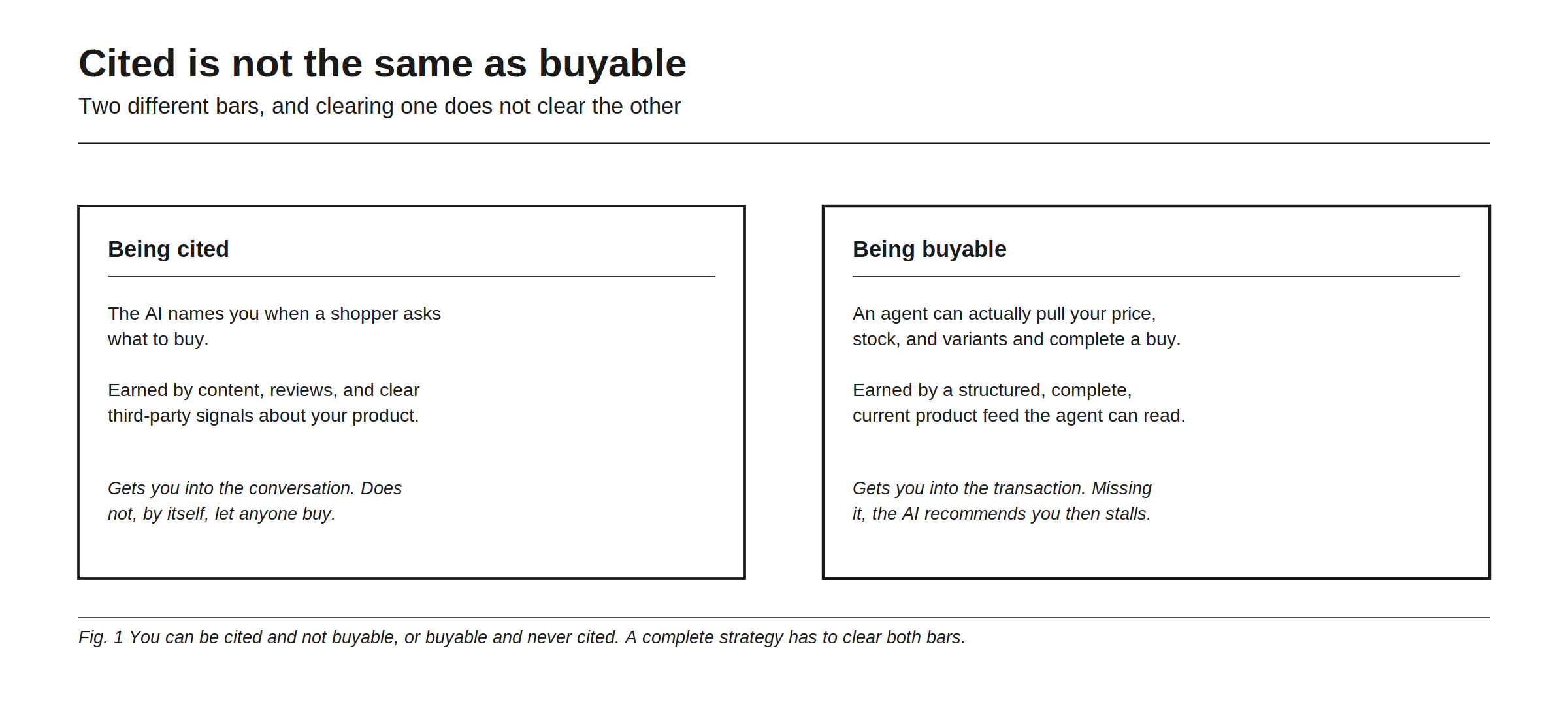
Hold the two bars apart. Being cited: the AI names you when a shopper asks what to buy, earned by content, reviews, and clear third-party signals about your product, which gets you into the conversation but does not by itself let anyone buy. Being buyable: an agent can actually pull your price, stock, and variants and complete a purchase, earned by a structured, complete, current product feed the agent can read, which gets you into the transaction, and missing it means the AI recommends you then stalls.
The trap is treating these as one problem. You can be cited and not buyable, or buyable and never cited, and a complete strategy has to clear both bars. The visibility half is the same discipline covered across this blog for any brand, rooted in how AI weighs sources, per where AI actually gets its sources. The buyable half is new, operational, and where most product feeds fail.
Where a shopper’s journey now breaks
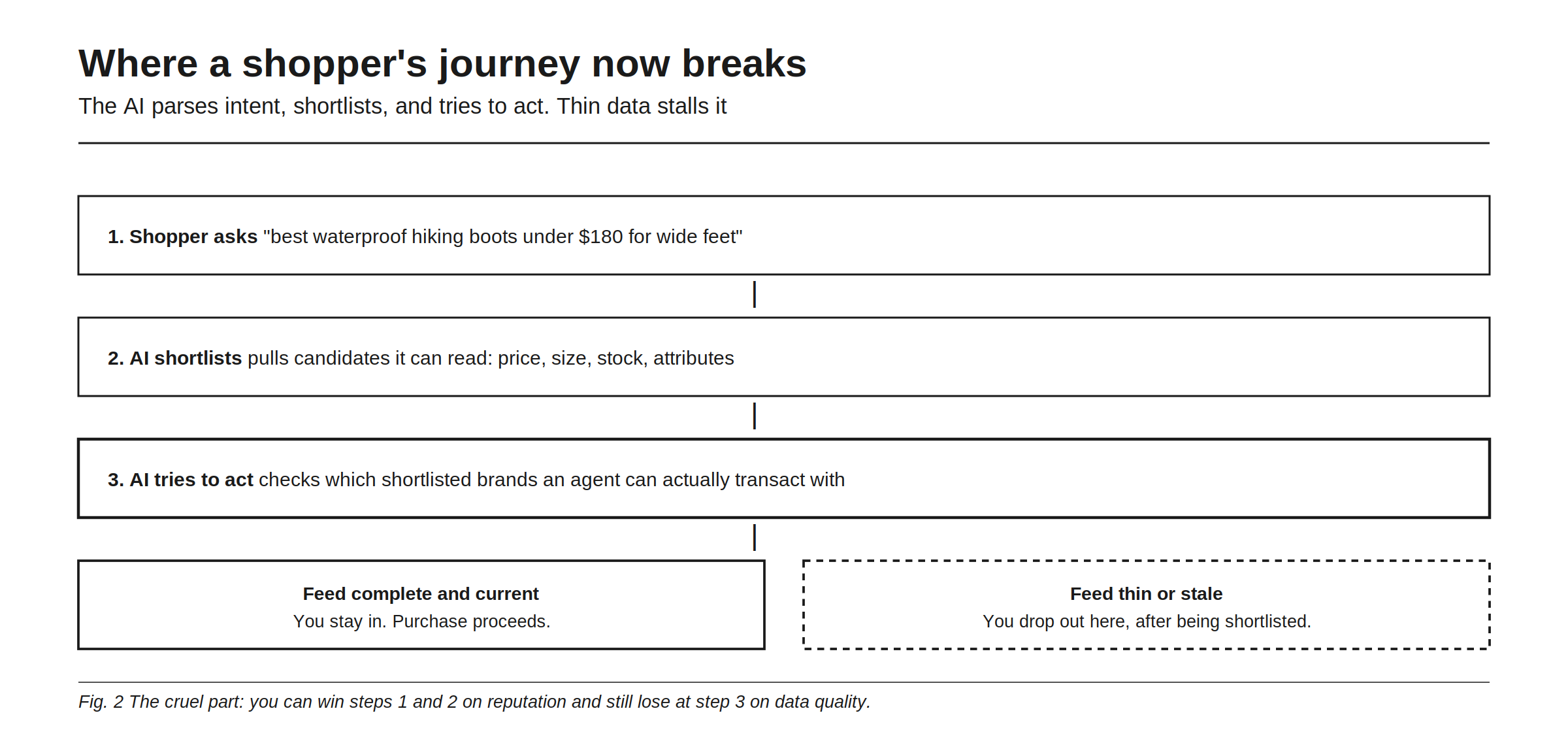
Follow what actually happens. A shopper asks something specific, “best waterproof hiking boots under $180 for wide feet.” The AI shortlists, pulling candidates it can read by price, size, stock, and attributes. Then the AI tries to act, checking which shortlisted brands an agent can actually transact with. If your feed is complete and current, you stay in and the purchase proceeds. If your feed is thin or stale, you drop out there, after being shortlisted.
The cruel part: you can win the first two steps on reputation and still lose at the third on data quality. This is different from the informational zero-click problem, where the answer replaces the visit, covered in agentic search versus zero-click. Here the agent wants to transact and cannot, because your machine-readable product data is not there. The recommendation was real; the fulfillment path was missing.
Close both gaps, and track both
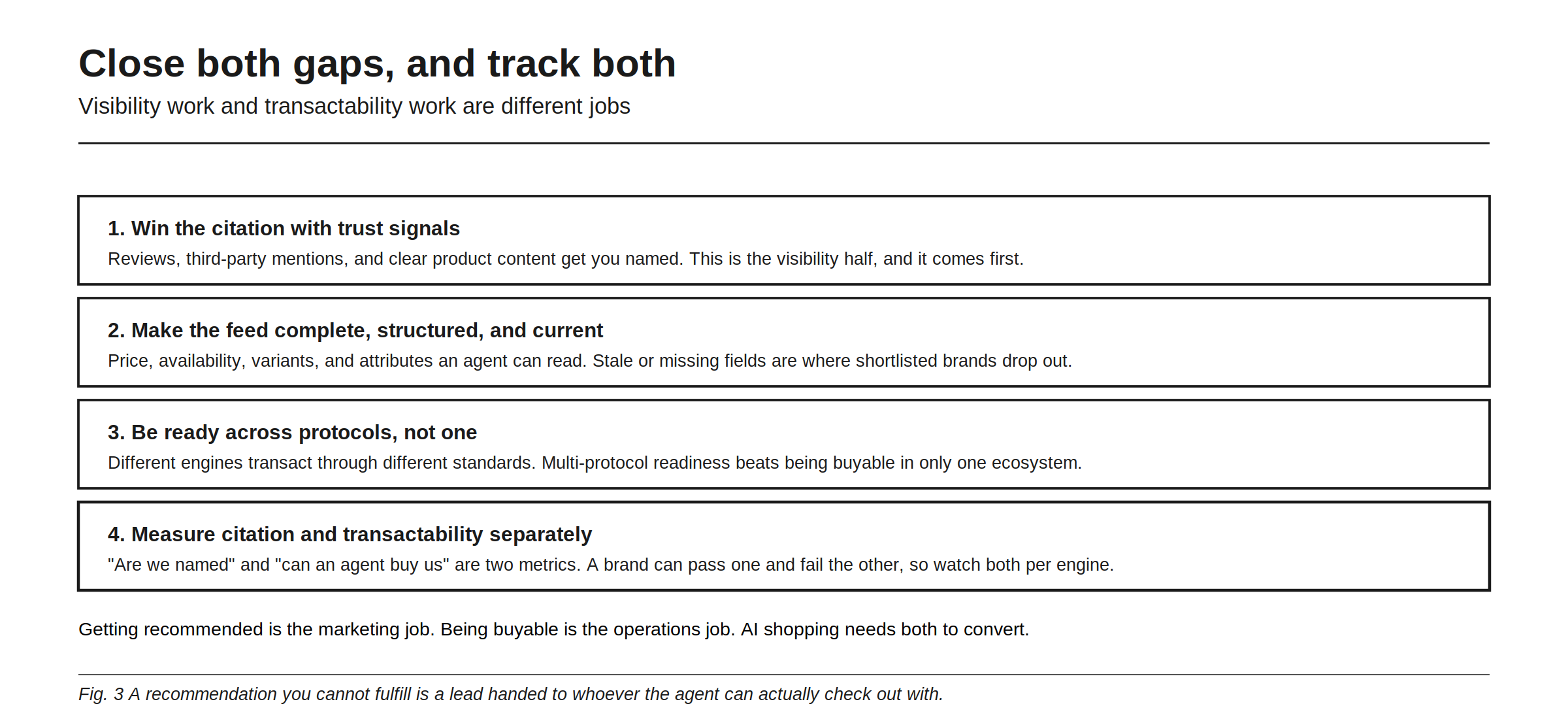
Four moves, split across two teams. First, win the citation with trust signals: reviews, third-party mentions, and clear product content get you named, the visibility half, and it comes first. Second, make the feed complete, structured, and current: price, availability, variants, and attributes an agent can read, because stale or missing fields are where shortlisted brands drop out, which is the schema work in what structured data actually does for AI visibility. Third, be ready across protocols, not one: different engines transact through different standards, so multi-protocol readiness beats being buyable in only one ecosystem, the subject of the companion piece the agentic commerce readiness check. Fourth, measure citation and transactability separately, because “are we named” and “can an agent buy us” are two metrics a brand can split on, so watch both per engine.
Getting recommended is the marketing job. Being buyable is the operations job. AI shopping needs both to convert, and a recommendation you cannot fulfill is a lead handed to whoever the agent can actually check out with. Why the recommendation itself carries the revenue weight is in the mention-versus-recommendation gap.
Why this split matters more every month
The reason to internalize this now, rather than later, is that the two halves are diverging in importance at different speeds. Discovery in AI is already mainstream, with a large share of shoppers starting product research in an assistant rather than a search bar. Transactability is racing to catch up through competing commerce protocols, and crucially, the platforms have signaled that paying a transaction fee does not buy you better ranking, the AI still chooses on availability, price, quality, and whether you are the primary seller. That means you cannot spend your way past a weak feed; you have to fix the data. It also means the old attribution picture breaks, because a shopper can discover you in one AI, buy through another surface, and have the credit land on organic search, hiding the AI’s role entirely. Brands that treat AI shopping as one blurry “get mentioned” goal will keep losing sales they think they won. The ones that separate visibility from transactability, and measure each, will see where the journey actually breaks. Rankry tracks whether AI engines cite and recommend your products, per engine, so you can pair that with your feed readiness and see the full picture, from $99 a month on a no-card trial.
FAQ
What is the difference between being cited and being buyable in AI shopping? Being cited means an AI names your product when a shopper asks what to buy. Being buyable means an agent can read your price, stock, and variants and complete the purchase. You can be cited without being buyable, in which case the AI recommends you and then cannot transact, so the sale goes elsewhere.
Why does an AI recommend my product but not let people buy it? Usually because your product feed is incomplete, unstructured, or out of date. The AI shortlists you on reputation, then needs machine-readable price, availability, and variant data to transact. If that data is thin or stale, you drop out at the checkout step despite being recommended.
Does paying a transaction fee improve my AI shopping ranking? No, according to the platforms. Fees are charged on completed purchases but are stated not to influence product ranking. AI assistants rank on factors like availability, price, quality, and whether you are the primary seller, so a strong, accurate feed matters more than fee participation.
Do I need to support more than one commerce protocol? Increasingly yes. Different AI engines transact through different standards, so being buyable in only one ecosystem limits you. Multi-protocol readiness lets more agents complete purchases with you, which matters as no single engine dominates the shopping surface.
How do I track AI shopping visibility? Track two things separately: whether AI engines cite and recommend your products (the visibility metric), and whether an agent can actually transact with your feed (the readiness metric). A brand can pass one and fail the other, so measure both, per engine, rather than as a single score.
See whether AI engines actually cite and recommend your products, per engine, so you can pair visibility with feed readiness. Start a free 7-day Rankry trial, no card, first report in two minutes.