Zero-click search and agentic search are two different problems that look identical in your analytics, and confusing them means fixing the wrong one. Zero-click is when a human searches but reads the answer without clicking through, so the intent was there but the visit was not. Agentic is when a human does not search at all, they hand the task to an AI agent that researches, compares, and sometimes buys on their behalf, so you were never in front of the person. Zero-click is the older problem, made worse by AI Overviews; agentic is newer and growing far faster. The fixes differ: for zero-click you win the answer a human reads, for agentic you win the source an agent trusts. This guide separates them so you stop optimizing for the human who never arrives while ignoring the agent who decided.
Most traffic-loss advice in 2026 lumps these together under “AI is killing our clicks.” That framing hides the more important shift, and the faster-growing one.
Two different ways to lose the same visit
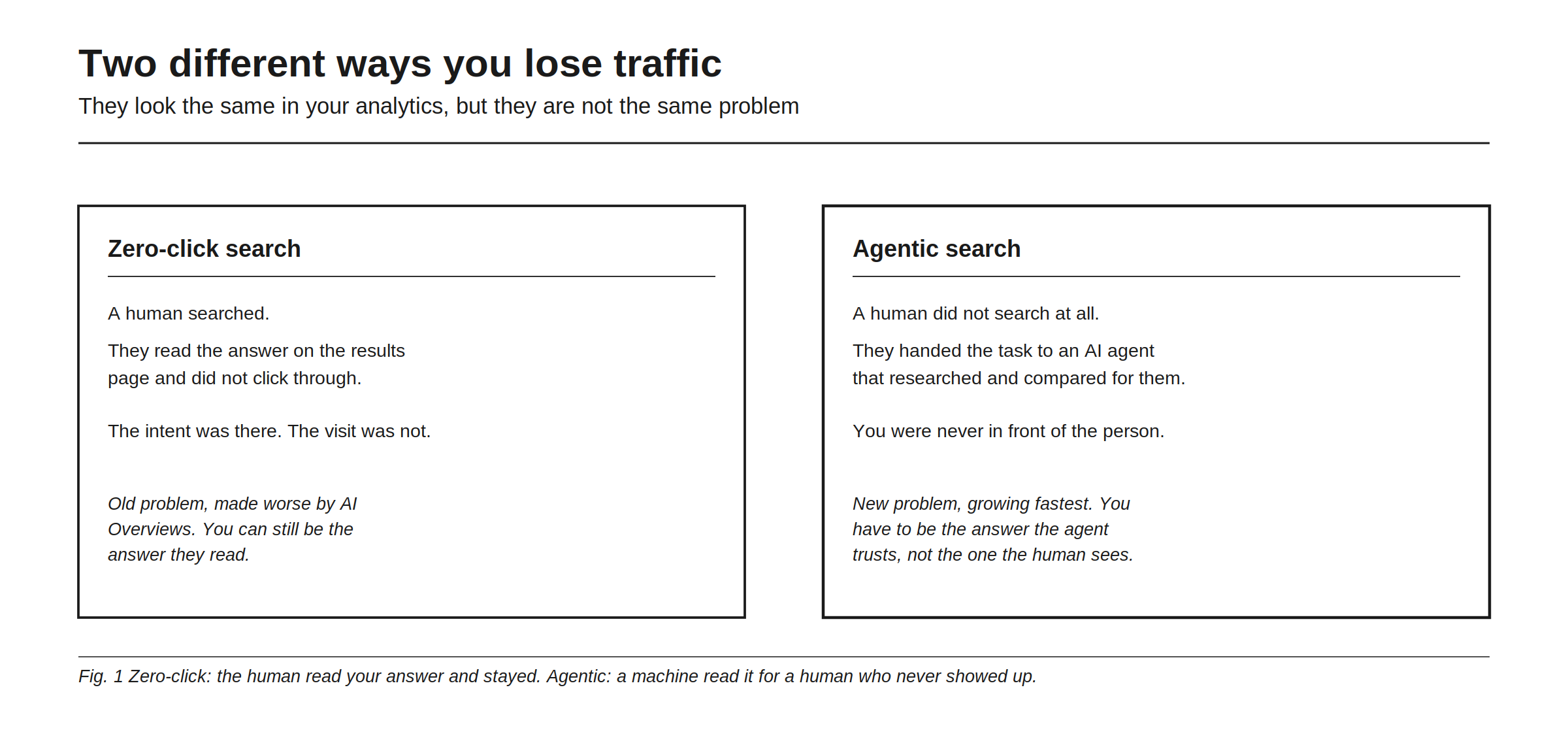
Here is the clean distinction. In zero-click search, a human searched, read the answer on the results page, and did not click through. The intent was there, the visit was not. It is an old problem made sharper by AI Overviews, and the good news is you can still be the answer they read. In agentic search, a human did not search at all. They handed the task to an AI agent that researched and compared for them, so you were never in front of the person. It is the new problem, growing fastest, and the fix is different: you have to be the answer the agent trusts, not the one the human sees.
The reason this matters is measurement and strategy. Both show up as “we lost traffic,” but a zero-click loss means your answer needs to be more citable, while an agentic loss means the machine deciding for your buyer did not pick you. Same symptom, opposite cause.
How discovery moved away from the click
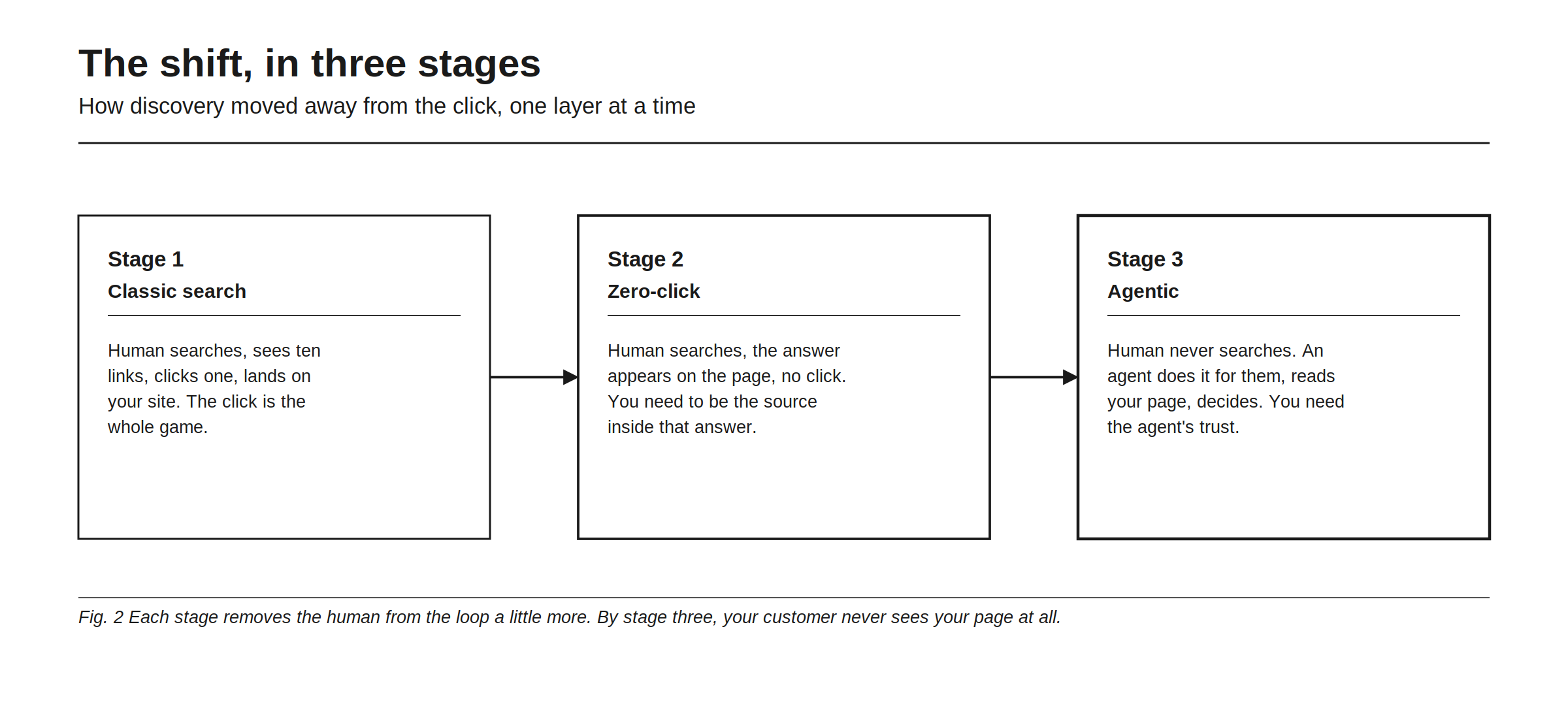
Think of it in three stages. Stage one, classic search: a human searches, sees ten links, clicks one, lands on your site, and the click is the whole game. Stage two, zero-click: a human searches, the answer appears on the page, no click, and you need to be the source inside that answer. Stage three, agentic: a human never searches, an agent does it for them, reads your page, and decides, so you need the agent’s trust.
Each stage removes the human from the loop a little more. By stage three, your customer never sees your page at all; a machine reads it and reports back a summary the person acts on. This is why “get more traffic” stopped being a coherent goal. The question is now “when a human or a machine encounters my brand in an answer, do I win,” and the two require different work. The zero-click side connects to the broader monitoring loop in how to monitor your brand across AI search engines.
Different problem, different fix
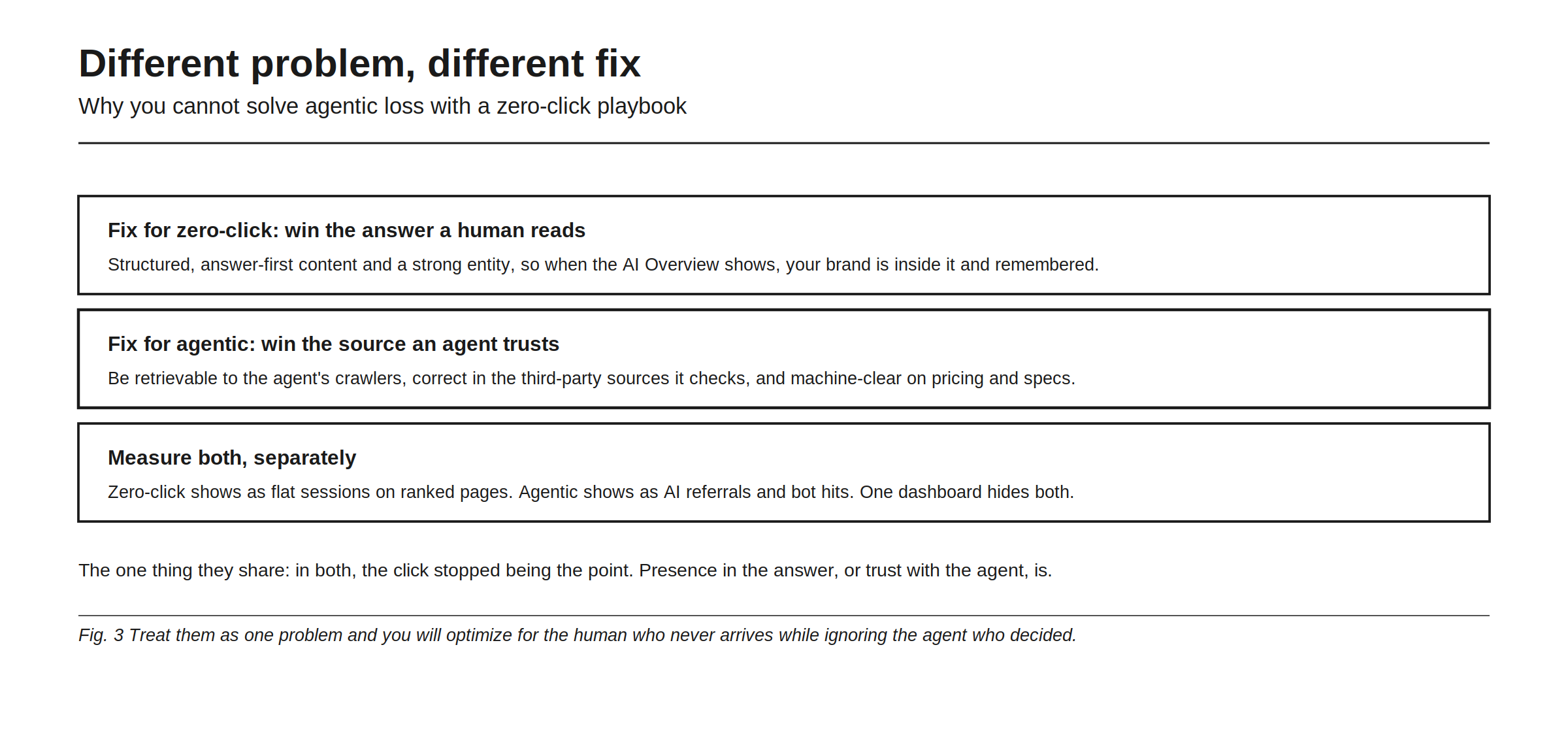
The fixes do not overlap as much as people assume. For zero-click, you win the answer a human reads: structured, answer-first content and a strong, clear brand entity, so when the AI Overview shows, your brand is inside it and remembered. For agentic, you win the source an agent trusts: being retrievable to the agent’s crawlers, correct in the third-party sources it checks, and machine-clear on pricing and specs so a program can parse you without guessing. And you measure both separately, because zero-click shows up as flat sessions on pages that still rank, while agentic shows up as AI referrals and bot hits, and one blended dashboard hides both. The bot side of that measurement is in bots versus humans in your traffic, and which bots matter is in the five types of AI bots.
The one thing they share: in both, the click stopped being the point. Presence in the answer, or trust with the agent, is what you are competing for now. Treat them as one problem and you will pour effort into the human who never arrives while ignoring the agent who already made the decision.
Why agentic is the one to watch
Zero-click is large and mostly understood; the harder shift is agentic, because it is growing fastest and it removes your last point of contact with the buyer. When a person reads an AI Overview, at least your brand can register in their memory. When an agent does the research, the human may never even see your name unless the agent surfaces it. That makes your standing with the agent, whether it retrieves you, trusts your sources, and can parse your offer, the decisive factor. It also means the old SEO reflexes translate poorly, which is covered in the field guide for people who already know SEO. The practical takeaway: keep earning the readable answer for zero-click, but start treating “can a machine research me correctly” as a first-class question, because that is the layer your competitors have not woken up to yet.
Rankry tracks what the AI actually says and recommends when the question is asked, across every engine you run, so you can see whether you win the answer a human reads and the source an agent trusts, from $99 a month on a no-card trial.
FAQ
What is the difference between zero-click and agentic search? Zero-click means a human searched but read the answer without clicking to a site. Agentic means a human did not search at all, an AI agent did the research and deciding for them. Same traffic loss, different cause and different fix.
Why is agentic search growing so fast? Because AI agents that browse, compare, and act on a user’s behalf went from a tiny share of automated traffic to a major one in a single year. As people delegate more research to agents, more discovery happens without the human ever searching directly.
How do I optimize for agentic search? Make yourself easy for a machine to trust and parse: allow the retrieval and user-fetch bots, keep third-party sources about you accurate, and present pricing and specs in a clear, machine-readable way. The agent decides on evidence, not on persuasion.
Does zero-click optimization also fix agentic loss? No. Zero-click fixes make you the answer a human reads; agentic fixes make you the source a machine trusts. They overlap on content quality but diverge on retrievability, structured data, and third-party proof. Do both.
How do I measure agentic search in my analytics? Look at AI referrals and AI bot activity in your logs, kept separate from human sessions. Agentic activity often looks like a bounce or a bot hit, so a plain sessions number will hide it. Track the AI slice on purpose.
See whether you win both the answer a human reads and the source an agent trusts, across every engine. Start a free 7-day Rankry trial, no card, first report in two minutes.