AI recommendations change overnight because four things shift underneath them: a new model ships with different training and retrieval, the engine’s index updates and its sources change, a competitor earns a new mention or page, or the same prompt simply varies between runs. You cannot stop the ground from moving, especially in a summer where major models are launching in waves, this July alone brought Moonshot’s Kimi K3, with Gemini 3.5 Pro and DeepSeek V4 landing on its heels, but you can build durable visibility that survives updates, and you can see a shift the week it happens instead of months later from an unexplained sales dip. The defense is broad corroboration, presence across the engines your buyers use, and weekly monitoring.
Every founder who tracks their AI visibility has felt this: you were recommended last month, and this month a competitor is, and nothing you did changed. The cause is almost never you. It is the platform moving, and the teams that win are the ones built to withstand the movement rather than surprised by it.
Why the ground moves
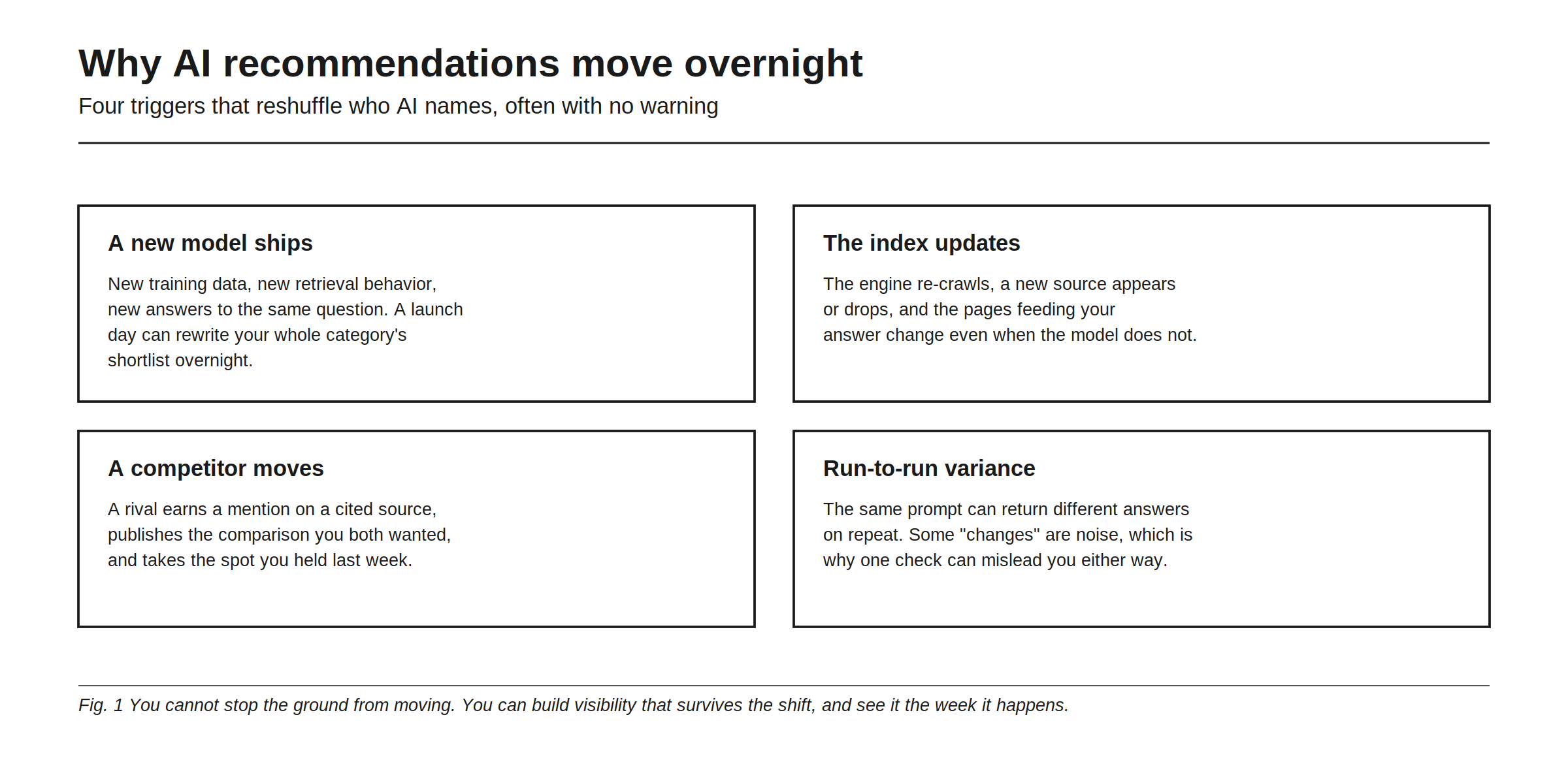
Four triggers reshuffle who AI names. A new model ships, and with it comes new training data, new retrieval behavior, and new answers to the same question, so a launch day can rewrite your category’s shortlist overnight; this is why model-release weeks matter far more than most marketers realize. The index updates, the engine re-crawls, a source appears or drops, and the pages feeding your answer change even when the model does not. A competitor moves, earning a mention on a source the engine cites, or publishing the comparison you both wanted, and takes the position you held last week. And run-to-run variance means the same prompt can return different answers on repeat, so some “changes” are noise, which is exactly why a single check can mislead you in either direction, and why the size of the move against your margin of error is what tells you whether to react at all.
The uncomfortable truth: your AI visibility sits on a surface that updates without telling you. That is not a reason to despair; it is a reason to build for it.
Fragile visibility vs durable visibility
The teams caught off guard usually have fragile visibility. The teams that shrug off updates have durable visibility. The difference is structural.
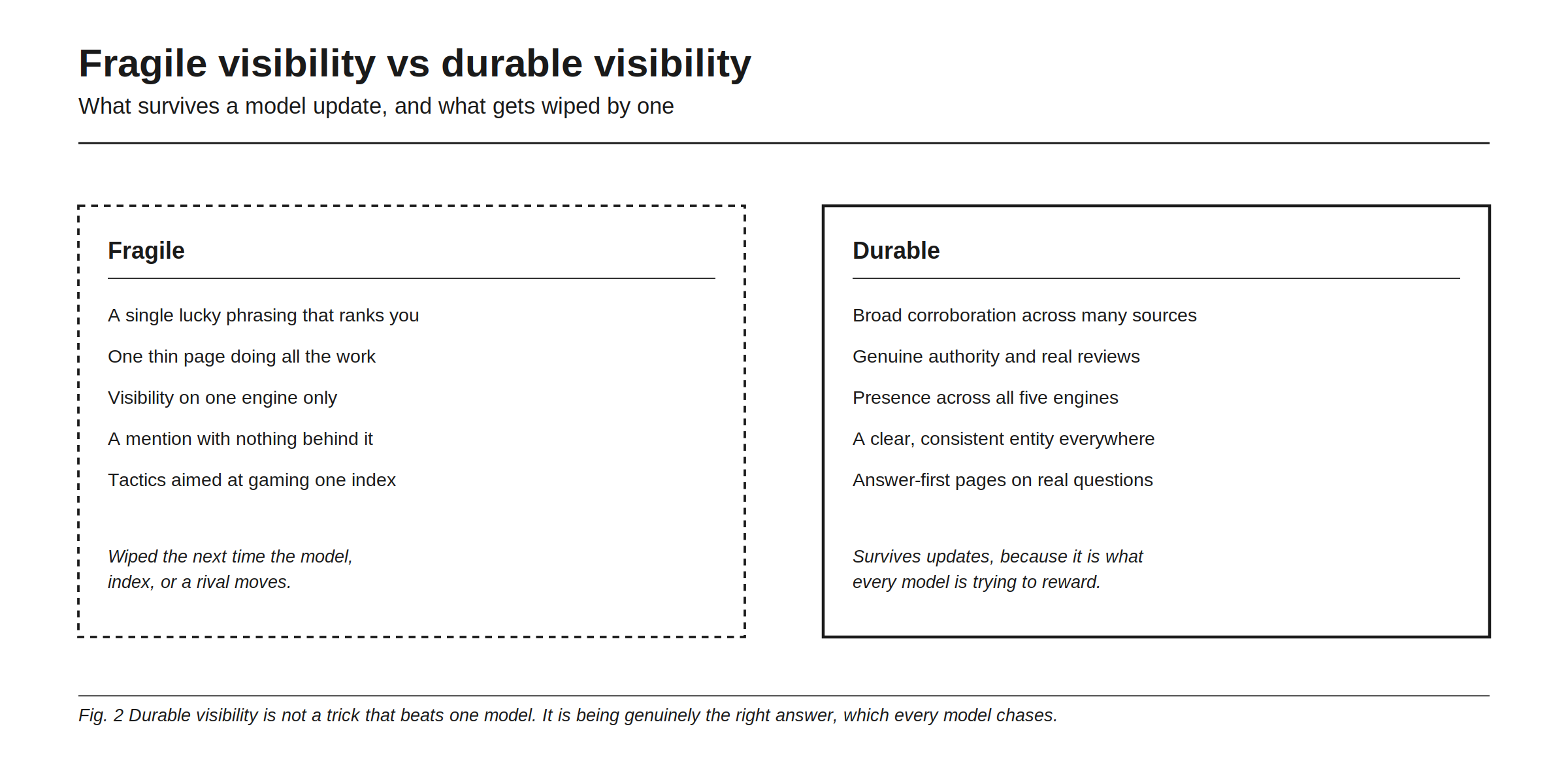
Fragile visibility rests on a single lucky phrasing, one thin page doing all the work, presence on one engine, a mention with nothing behind it, or tactics aimed at gaming one index. All of it gets wiped the next time the model, the index, or a rival moves. Durable visibility rests on broad corroboration across many sources, genuine authority and real reviews, presence across the engines your buyers use, a clear and consistent entity, and answer-first pages on the questions buyers actually ask. It survives updates for a simple reason: it is not a trick that beats one specific model, it is being genuinely the right answer, which every model is trying to reward. When you optimize to actually be the best-corroborated answer, a model update tends to help you, because newer models are usually better at recognizing exactly that.
Presence on one engine deserves special mention, because it is the fragility teams notice last: the engines disagree about your category far more than most people expect, so a position built on ChatGPT alone says nothing about the other four, as we showed in the multi-model problem. The strategic reframe: stop chasing what one current model likes, and build the thing all models are converging to reward. The full lever order for that is in AI search ranking strategies.
How to not get caught off guard
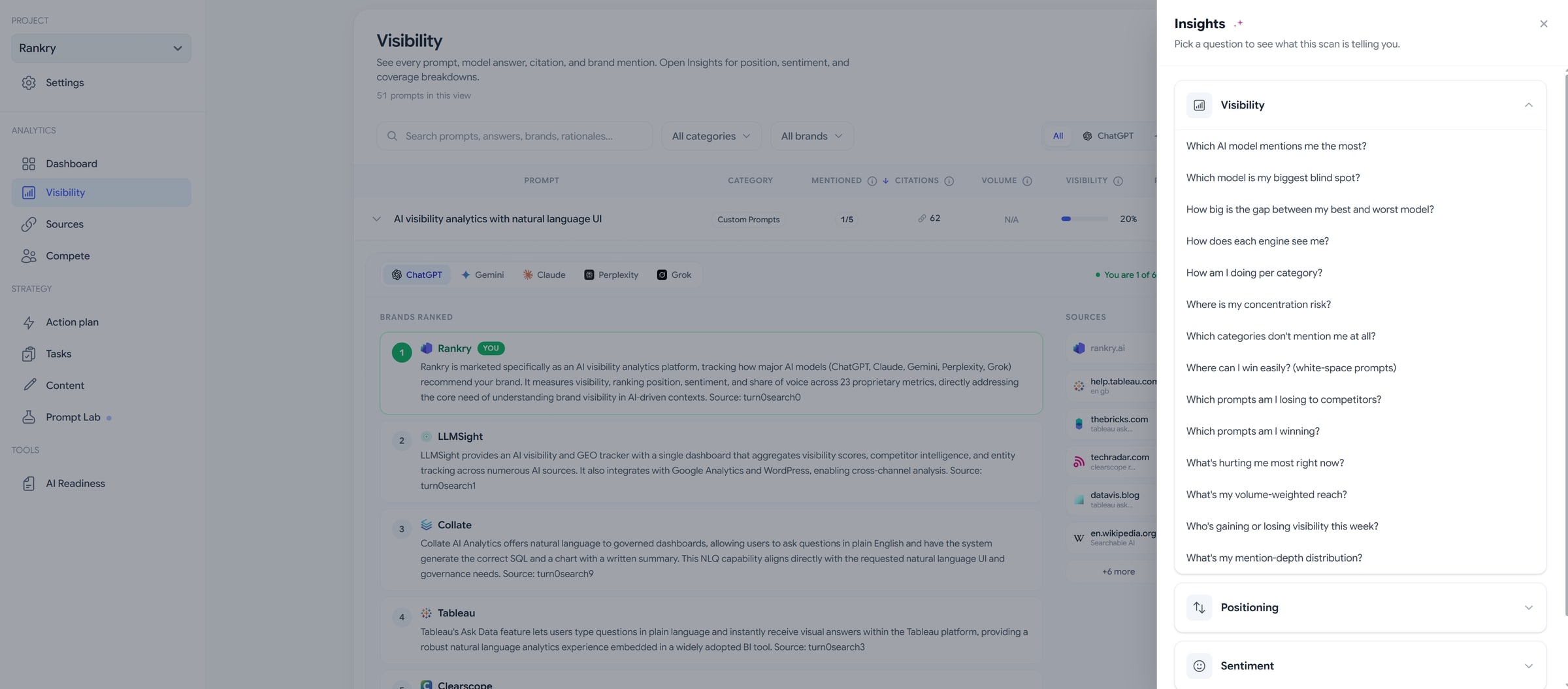
Durability protects you; monitoring warns you. You need both. Track a fixed set of buyer prompts across your tracked engines on a weekly schedule, so when a model update or a competitor move reshuffles your category, you see it in days, not in a quarter-end revenue review. Watch the cited sources, not just the score, because the sources feeding your answer often change before the answer does, an early warning you can act on. And around known model launches, re-run your core prompts deliberately in the days after, since that is when the reshuffles cluster. This is the practical habit behind the mindset; the mechanics are in how to monitor your brand across AI search engines.
What to do the week a major model lands
Model updates are not the only clock running against you. Content that is never refreshed tends to lose its citations within about a quarter, a pattern covered in the 3-month citation cliff, so durability needs both a monitoring habit and a refresh habit.
Model launch days are the highest-risk, highest-opportunity moments for AI visibility, and almost nobody treats them as events. When a major model ships, do three things within the week. Re-run your top buyer prompts on the new model and compare against the old answers, so you know immediately whether the reshuffle touched you. Check whether you gained or lost on your highest-value prompts specifically, not just overall. And if you dropped, look at what the new winner has that you do not, on the cited sources, that is your fix list, freshly generated by the update. Handled this way, a launch that quietly costs your competitors visibility becomes the week you gain it.
The mindset that ends the surprise
The founders who stop being surprised by AI shifts are the ones who accepted that AI visibility is a moving position, not a fixed ranking you win once. You do not “achieve” AI visibility and bank it; you hold it, watch it, and defend it, the way you would a market position. That sounds like more work, but it is mostly a change in expectation: from “why did this change” to “what changed this week, and what do I do about it”. Durable content means the changes are small and usually in your favor; weekly monitoring means you always know. Between the two, overnight surprises turn into Tuesday’s to-do list.
FAQ
Why do AI recommendations change so often? Four reasons: new models ship with different training and retrieval, indexes update and sources change, competitors earn new mentions, and the same prompt varies between runs. Your AI visibility sits on a surface that updates frequently, often without warning.
Do new AI model releases change who gets recommended? Yes, significantly. A new model brings new training data and retrieval behavior, which can rewrite a category’s shortlist overnight. Model launch weeks are when recommendation reshuffles cluster, so it is worth re-checking your prompts right after one.
How do I build AI visibility that survives model updates? Build durable visibility: broad corroboration across many sources, genuine reviews and authority, presence across the engines your buyers use, a consistent entity, and answer-first content. This survives updates because newer models get better at rewarding exactly these signals.
How do I know if a model update hurt my AI visibility? Track a fixed set of buyer prompts across your tracked engines weekly and compare week over week, paying special attention to the days after a major model launch. Watching cited sources gives even earlier warning, since they often change before the answer does.
Can I prevent my AI visibility from dropping? You cannot freeze it, the platforms move. But durable visibility keeps drops small and often turns updates in your favor, and weekly monitoring ensures you catch any drop in days and can respond, rather than discovering it months later.
See the shift the week it happens: track your prompts across the engines you picked and catch every reshuffle early. Start a free 7-day Rankry trial, no card, first report in two minutes.