ChatGPT sends the most AI referral traffic by a wide margin. Conductor’s 2026 AEO/GEO benchmark, built on 13,770 enterprise domains and 3.3 billion sessions, attributed 87.4% of all AI referral traffic to ChatGPT, with Perplexity, Gemini, Copilot, and Claude splitting the rest. But volume is not the whole story: each engine sends a different kind of visitor, Perplexity skews toward higher research intent, Gemini and Copilot reach users inside the Google and Microsoft ecosystems, and the smaller engines are growing far faster in percentage terms. Similarweb data for 2026 put Gemini’s referral visits up 388% year over year against roughly 52% for ChatGPT. So the practical answer for your site is not the industry average; it is your own mix.
If you only instrument one engine, instrument ChatGPT first, because that is where the volume is. But if you stop there, you will miss the smaller engines that are quietly compounding and, in some categories, sending your best-converting visitors.
The current landscape
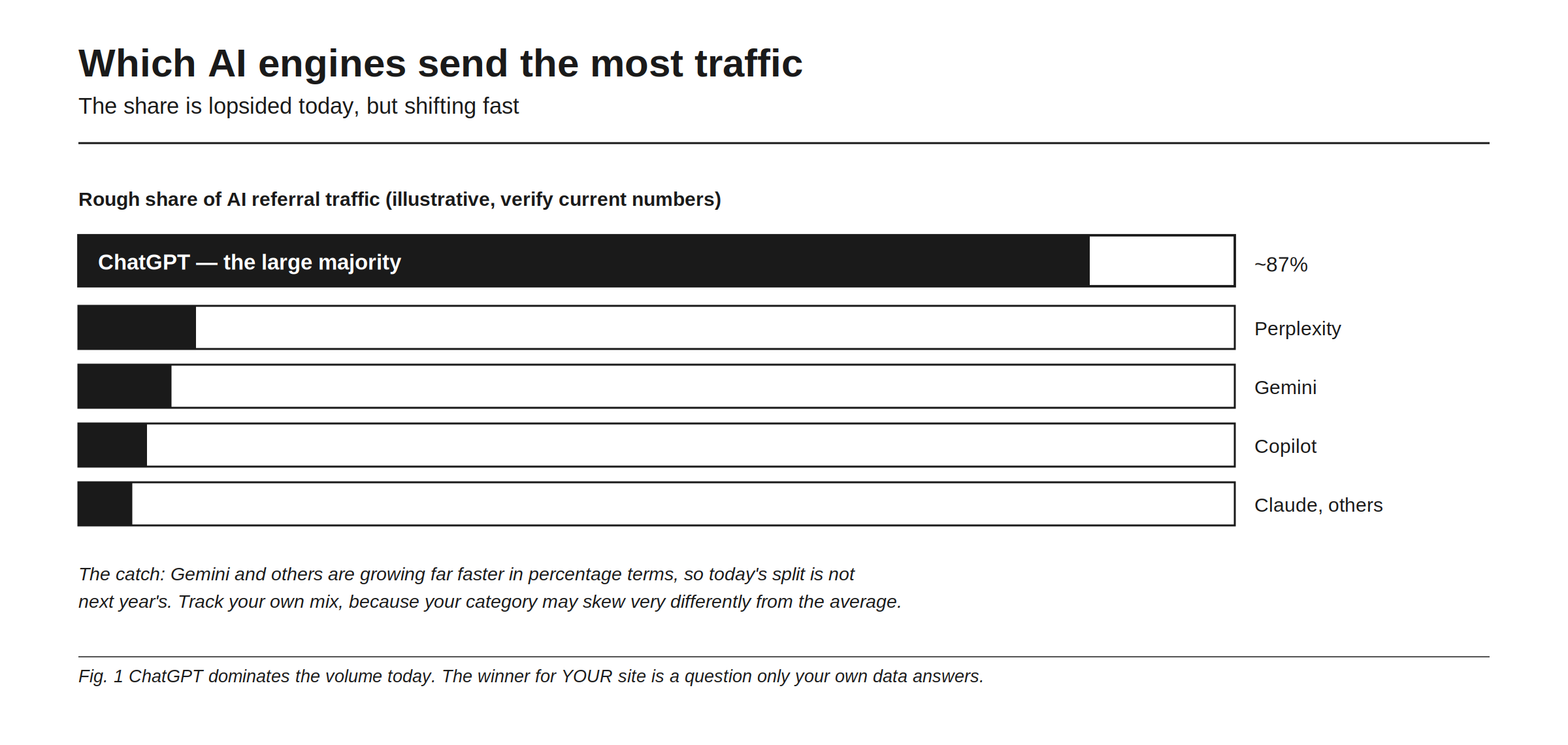
The split is lopsided today. Conductor’s 2026 benchmark put ChatGPT at 87.4% of AI referral traffic across 13,770 domains, with Perplexity, Gemini, Copilot, and Claude sharing the remainder. If you are deciding where to focus first, that ordering is a reasonable default.
Two caveats belong next to that number. The first is scale: the same study measured AI referrals at 1.08% of all traffic across the ten industries it covered, so this is a small channel that behaves like an early one. The second is the trend. Similarweb’s 2026 figures showed Gemini referral visits up 388% year over year while ChatGPT grew about 52%, so today’s split is not next year’s, and different cuts of the data put those growth rates in different places. Treating ChatGPT as the only channel that matters is a snapshot mistake in a market moving this fast. These are also averages across many industries; your category may skew very differently, which is why your own data beats any published chart. Verify the current figures when you act on them, because this ranking shifts quarter to quarter.
Volume is not the whole story
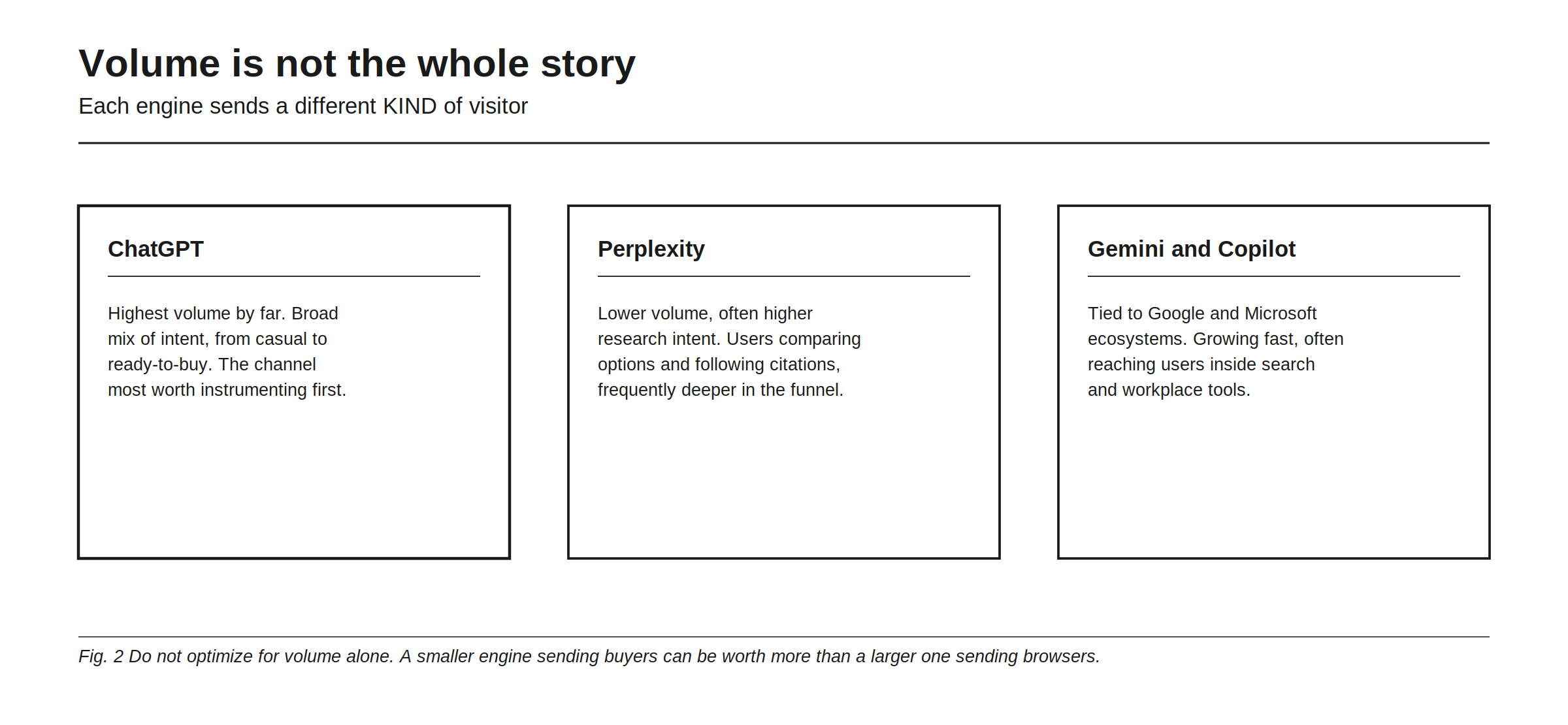
Each engine sends a different kind of visitor, and the differences matter more than the raw counts. ChatGPT brings the highest volume by far, with a broad mix of intent from casual to ready-to-buy, which makes it the channel most worth instrumenting first. Perplexity brings lower volume but often higher research intent, users comparing options and following citations, frequently deeper in the funnel. Gemini and Copilot are tied to the Google and Microsoft ecosystems, growing fast and often reaching users inside search and workplace tools.
This is where the broader research is consistent even when the exact multiples are not: several 2026 analyses find AI-referred visitors converting several times better than standard organic, with the reported gap ranging from roughly four times to far higher depending on which conversion event is being counted. Turning that gap into an argument a decision-maker will fund is the business case for AI visibility. Read those multiples carefully, because “conversion” means a form fill in one study and a purchase in the next. The direction is reliable; the magnitude is not a number to put in a board deck without checking what it measured.
The lesson: do not optimize for volume alone. A smaller engine that sends buyers can be worth more to your revenue than a larger one that sends browsers. The only way to know which engine sends your best visitors is to measure not just the count per engine but what those visitors do once they arrive.
How to find your own mix
Published averages are a starting point, not an answer, because your category, content, and audience determine your actual split. To find yours, you need per-engine traffic data tied to behavior: how many visits each engine sends, and then engagement, pages, and conversions for each. In GA4 you can approximate the volume side with a custom channel group and regex, though it misses copy-paste and AI Overview traffic; the full manual method and its gaps are in how to track AI referral traffic in GA4.
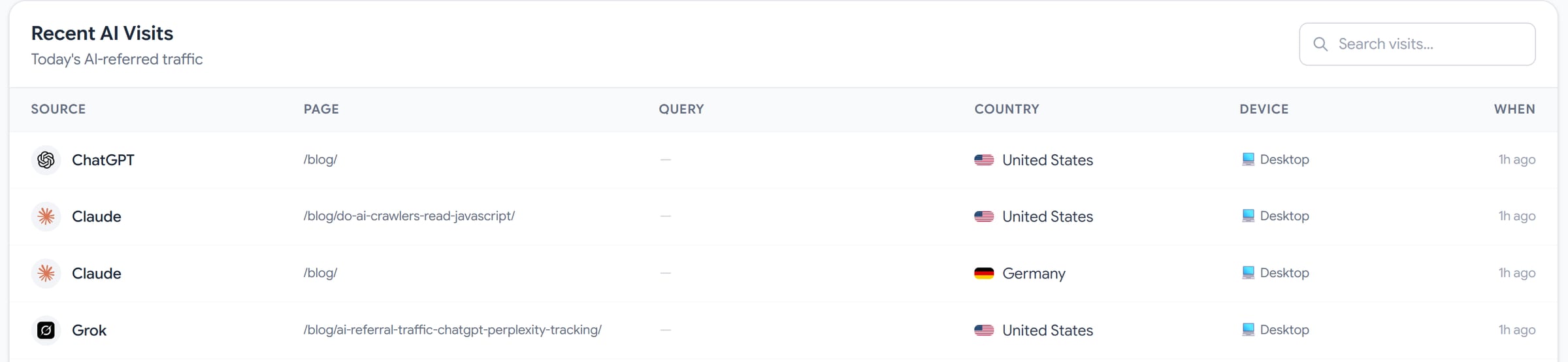
Rankry’s AI Traffic dashboard gives you the per-engine breakdown directly. It recognizes ten AI sources out of the box, ChatGPT, Perplexity, Claude, Gemini, Grok, Copilot, Bing Chat, You.com, Phind, and Poe, and reports total AI visits, traffic by platform, and the geography, language, device, and engagement time behind each, so you can see not just that ChatGPT sends the most, but which engine sends the visitors who actually stay. Like every referrer-based method, it counts the visits that arrive with a referrer, so read the per-engine split as a share of measurable AI traffic rather than of all of it. The feature is covered in introducing AI Traffic.
What to do with the answer
Once you know your mix, act on it. Instrument and optimize for your highest-volume engine first, usually ChatGPT, since that is the biggest lever. Watch the fast-growing engines, because a channel at 5% growing triple digits becomes a channel at 20% quickly. And weight by value, not just volume: if a smaller engine sends visitors who convert, it deserves attention out of proportion to its size. The revenue framing is in do AI answers actually drive traffic and revenue, and the visibility work that increases the traffic in the first place is in how to monitor your brand across AI search engines.
FAQ
Which AI sends the most referral traffic? ChatGPT, by a wide margin. Conductor’s 2026 AEO/GEO benchmark, built on 13,770 enterprise domains and 3.3 billion sessions, attributed 87.4% of all AI referral traffic to ChatGPT, with Perplexity, Gemini, Copilot, and Claude splitting the remainder. Your own category may differ, so measure your specific mix.
Does Perplexity or ChatGPT send better traffic? ChatGPT sends far more volume; Perplexity often sends higher research intent, users comparing options and following citations. “Better” depends on your funnel, so measure engagement and conversion per engine rather than visit counts alone.
Is Gemini traffic worth tracking if it is small? Yes. Similarweb data for 2026 put Gemini’s referral visits up 388% year over year against roughly 52% for ChatGPT, so a small share today can grow into a large one quickly. Tracking it early lets you see the shift while it is still cheap to act on.
How much of my total traffic will AI send? Not much yet, and that is normal. Conductor measured AI referrals at 1.08% of all traffic across the ten industries it analysed in 2026. The reason to instrument it is not today’s volume, it is the growth rate and the unusually high intent of the visitors.
Why does my AI traffic mix differ from industry averages? Because your category, content, and audience shape it. Published figures are cross-industry averages, and a B2B SaaS and a local service business can have very different engine mixes, which is why your own data matters more than any published chart.
See exactly which AI engine sends your traffic, and which sends the visitors who stay, in one dashboard. Start a free 7-day Rankry trial, no card, first report in two minutes.